The question was pointed. The answer was perfect.
After India dismantled New Zealand by 48 runs in Nagpur on January 21, 2026, reporters asked Arshdeep Singh about being rotated in and out of the squad under Gautam Gambhir. The left-arm pacer could have deflected. He could have offered diplomatic non-speak. Instead, he delivered a line that captured both his skill set and his temperament.
“Jaise main team se in and out hota hoon uska advantage bhi hai. Mera ball bhi in and out jaata hai,” Arshdeep said, translating roughly to: “Being in and out of the team has its advantages. Like I am in and out of the team, my ball is also coming in and going out.”
The room understood immediately. His outswingers and inswingers remain deadly regardless of selection patterns. And his mental approach remains unshaken despite Gambhir’s constant experimentation.
What the Numbers Actually Show
Arshdeep has appeared in 13 of India’s 21 T20Is in 2025. That rotation drew criticism from fans who watched India’s most prolific T20I wicket-taker warm the bench during key Asia Cup matches. The 26-year-old now owns 111 wickets in 73 T20 internationals. He became the first Indian bowler to reach 100 T20I wickets last September against Oman.
The Conway dismissal in Nagpur added another line to his resume. Arshdeep now holds the record for most wickets while opening the bowling in T20Is, surpassing Shaheen Afridi and Junaid Siddique with 28 scalps in 67 innings. Shaheen needed 87 innings to reach 27 wickets in the same role.
This was the 12th time Arshdeep struck in the first over of an innings. His ability to shape the new ball both ways makes him invaluable in the powerplay. Since his 2022 debut, no bowler has more powerplay wickets than his 43.
The Tactical Reality Behind Gambhir’s Decisions
Understanding why Gambhir rotates Arshdeep requires understanding modern T20 team construction. India faces different challenges depending on conditions, opposition, and tournament preparation timelines. The T20 World Cup begins February 7. Gambhir wants options.
Against New Zealand, India fielded a pace attack featuring Jasprit Bumrah, Hardik Pandya, and Arshdeep. The combination worked. Arshdeep’s 4-0-31-1 figures reflected controlled aggression on a batting-friendly surface where India posted 238 runs.
The Nagpur pitch offered little assistance for seamers. Spinners Varun Chakravarthy and Axar Patel shared three wickets between them. Yet Arshdeep’s single wicket proved decisive. Conway’s early departure shifted New Zealand’s chase psychology entirely.
Sometimes impact transcends statistics.
A Masterclass in Professional Mindset
What separates Arshdeep from frustrated cricketers who sulk through rotation periods? His explanation revealed everything about his approach.
“My job is to remain ready and whenever team wants me to bowl in any format with new or old ball, I can give my best,” he said. “My aim is to enjoy the journey, remain in present and focus on the controllable. What is not in my control, I shouldn’t be bothered about it.”
These words matter because cricket selection breeds paranoia. Players wonder about politics, favoritism, and hidden agendas. Arshdeep refuses to participate in that mental game. He trains. He waits. He performs.
The T20 World Cup winner from 2024 understands his value. His 17 wickets in that tournament equaled the competition record. The ICC named him Men’s T20I Cricketer of the Year for 2024, the first bowler to receive that honor.
The Conway Wicket in Context
Sanju Samson’s one-handed catch behind the stumps made highlight reels. But the delivery itself showcased Arshdeep’s craft.
Second ball of the innings. New Zealand chasing 238. Conway, a left-hander who struggles against left-arm pace moving away from him. Arshdeep angled one across the batter, extracting enough movement off a good length to induce the edge.
That delivery pattern repeated throughout his spell. He varied his pace intelligently, never allowing batters to settle into rhythm. Glenn Phillips eventually blasted 78 off 40 balls against India’s spinners, but Arshdeep’s overs yielded only one boundary until the desperate final stages.
| Bowler | Overs | Runs | Wickets | Economy |
|---|---|---|---|---|
| Arshdeep Singh | 4 | 31 | 1 | 7.75 |
Why Rotation Actually Benefits India’s Depth
Casual observers criticize squad rotation. Tactical observers recognize its value for tournament preparation.
India possesses serious bowling depth. Bumrah remains the premium option. Hardik offers pace and batting utility. Mohammad Siraj provides express pace when conditions suit him. Harshit Rana emerges as a young prospect with genuine pace.
Gambhir needs all these bowlers tested before the World Cup. Playing conditions vary dramatically across tournament venues. Some pitches will demand swing bowlers. Others will favor pace and bounce. India requires information about each option.
Arshdeep accepts this reality because he understands his position within it. He remains India’s leading T20I wicket-taker. His death-overs expertise saved matches throughout 2024. When stakes rise, he bowls critical overs.
The Road to the T20 World Cup
Four matches remain in this New Zealand series. The second T20I arrives Friday in Raipur. Then Guwahati, Visakhapatnam, and Thiruvananthapuram follow before India’s World Cup campaign begins.
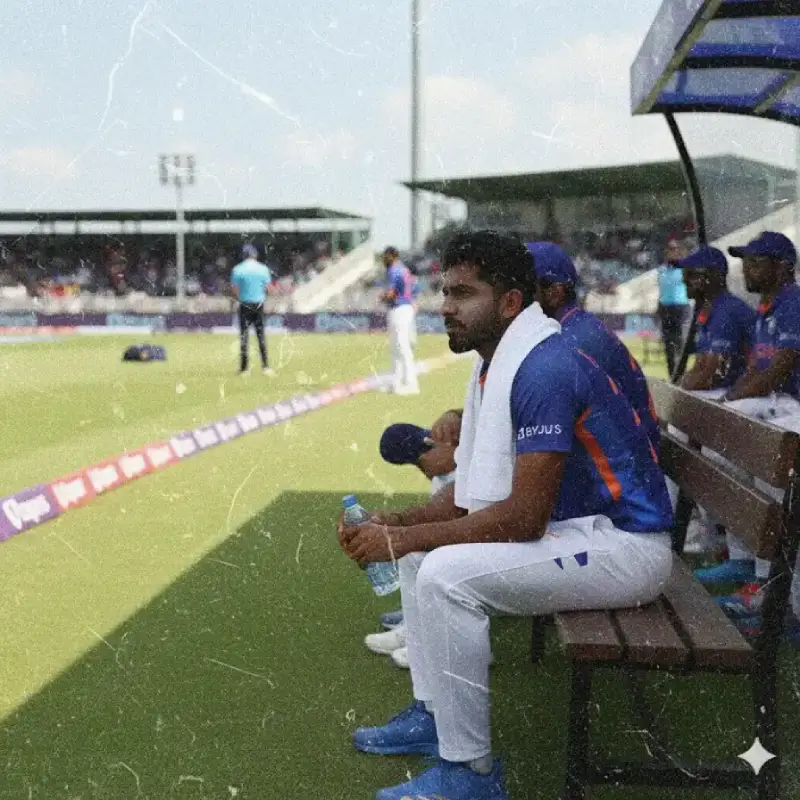
Arshdeep will likely miss at least one of these matches. Gambhir continues his evaluation process. Kuldeep Yadav sat out the Nagpur match. Harshit Rana watched from the dugout. Shreyas Iyer missed selection entirely despite being in the squad.
None of this bothers Arshdeep Singh. His ball still moves both ways. His yorkers still nail the blockhole. His temperament still absorbs pressure without cracking.
“Strategy changes depending on conditions,” he explained. “Plans are made based on opposition, kind of total on the board, and we adapt accordingly. The key is to remain flexible.”
Flexibility in approach. Consistency in execution. Humor in the face of uncertainty.
India’s T20 World Cup defense will eventually demand Arshdeep Singh’s specific skills. When that moment arrives, he will be ready. The in-and-out ball will keep swinging. The wickets will keep falling.
The rotation policy will suddenly make perfect sense.