A tweet blew up this week claiming Bill Belichick spent two decades quietly wrecking opposing kickers at Gillette Stadium. The internet, predictably, lost its mind over it.
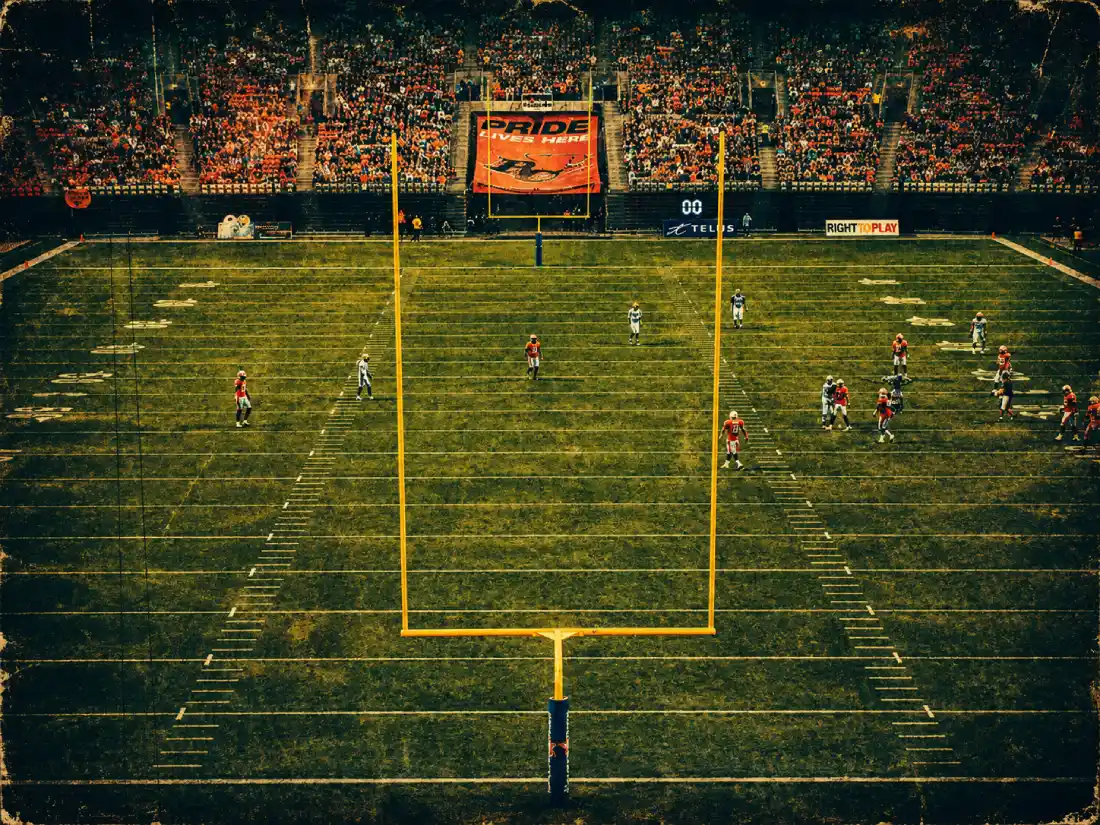
Ryan Paganetti is a former analytics coach for the Eagles, Jaguars and Raiders. He posted footage showing the Patriots flashing a reversed angle of the uprights on Gillette Stadium’s giant screens during opponents’ field goal attempts. He called it “diabolically clever.” He said he reviewed more than a decade of Patriots home broadcasts and found the pattern over and over.
Paganetti even said he tried to copy the idea himself while working in Philadelphia. He said the video board placement at Lincoln Financial Field made it “nearly useless” there.
Then came the harder look. The real story turned out to be a lot less sinister than “evil genius Belichick,” according to The Athletic’s Chad Graff.
What actually happened, according to a league source
The whole thing started with a kicker asking for a favor, not a scheme drawn up in a film room.
A league source told The Athletic that Stephen Gostkowski raised the issue in the early 2010s. He was a few years into his 15 year run in New England.
The Patriots showed video of him on the big screens during his own field goal tries. They did the same for every kicker, home or away.
Gostkowski found it distracting and asked if the team could switch to a static image for his kicks instead. The Patriots checked with the league office before making any change.
The NFL rule settled it. During a field goal or extra point attempt, video boards must show either an all-22 camera angle or a static image. Nothing in between is allowed.
Once that rule was on the table, the Patriots kept the all-22 view for opposing kickers. They switched to static for their own kicks, exactly as Gostkowski wanted.
That is not a mind game. That is a kicker asking his own team for a small favor and getting it.
Former Patriots tight end Christian Fauria pushed back on the conspiracy version even harder. “This is not entirely true,” Fauria said. He added that strict NFL rules around video boards leave no room for that kind of gamesmanship.
The stats are still wild, conspiracy or not
Here is the part that keeps this story alive no matter how ordinary the origin sounds. The numbers are genuinely lopsided.
From 2000 through 2025, visiting kickers posted a lower field goal percentage at Gillette Stadium than at any other team’s home stadium. That is according to The Athletic’s research. Patriots kickers, meanwhile, made 84 percent of their tries in Foxborough over that same span.
| Field goal splits at Gillette Stadium (2000 to 2025) | Make percentage |
|---|---|
| Visiting kickers at Gillette Stadium | 75 percent |
| Patriots kickers at Gillette Stadium | 84 percent |
| NFL average for road kickers | 82.5 percent |
A separate breakdown of the 2001 to 2019 window found the Patriots made 9.4 percent more field goals than their opponents. It circulated widely alongside Paganetti’s original post. No other team in the league topped a 4.0 percent gap over the same years.
Some of that split is just outdoor football in New England. The three stadiums where visiting kickers fare best, in Atlanta, Minnesota and Dallas, all sit indoors. Wind and cold do plenty of damage on their own.
Roster continuity matters too. New England ran two of the best kickers of their generation back to back for most of that window, first Adam Vinatieri and then Gostkowski.
The league and other teams say this is normal, not a Patriots secret
An NFL spokesperson confirmed to The Athletic that the Patriots’ video board setup follows league policy exactly as written. Nothing about it violates the rulebook.
Former NFL kicker Graham Gano, who played 16 seasons in the league, backed that up on social media. “This used to happen a lot in different places over the years,” Gano wrote, framing it as common practice rather than a Patriots invention.
He has a point. Panthers kickers have publicly called out the Buccaneers’ video board operator for similar tactics during their own attempts. Other stadiums around the league run the identical setup, all-22 for visitors and static for the home team.
One former special teams coordinator told The Athletic that his kickers never once complained about the video board. His team played multiple road games at Gillette Stadium during this era.
Belichick built a dynasty on stacking every tiny edge the rulebook allowed, and that reputation is exactly why this theory spread so fast. This time, the real edge traces back to a kicker with a good idea and a league office that said yes. It was not a scheme built to rattle Billy Cundiff.
Cundiff’s missed field goal for the Ravens in the 2012 AFC Championship Game is still the moment fans bring up first. This story keeps circling back to it. Whatever actually caused that miss, the video board rule behind it applies to every kicker at Gillette Stadium today.