Picture this: athletes launching 20 feet above a frozen halfpipe, spinning through the air while thousands of fans hold their breath. Snowboarding brings some of the most exciting and visually stunning moments to the Winter Olympics.
From its rebellious roots as a banned activity at ski resorts to becoming one of the Games’ most watched sports, snowboarding has transformed winter athletics forever.
From Outcast to Olympic Sport
Snowboarding started in the United States during the 1960s when surfers and skateboarders wanted something fun to do in winter. Early snowboards were crude contraptions, basically pieces of plywood with rope handles. Ski resorts banned snowboarders for years, viewing them as dangerous troublemakers who disrupted traditional skiing.
The sport grew anyway. The first national championships happened in 1982, followed by world championships in 1983. The International Snowboarding Federation formed in 1990, and the International Ski Federation recognized snowboarding as an official discipline in 1994. Just four years later, snowboarding made its Olympic debut at Nagano 1998.
That first Olympic snowboard competition featured only two events: giant slalom and halfpipe for both men and women. The sport has expanded dramatically since then. At the 2026 Winter Olympics in Milan, snowboarding will include 11 medal events across five different disciplines.
The Five Olympic Disciplines
Olympic snowboarding divides into freestyle events judged on tricks and racing events decided by speed. Understanding these disciplines helps fans appreciate what makes each one special.
Halfpipe puts riders in a massive U-shaped channel carved into the snow. Athletes ride up the walls, launch into the air, perform tricks, and land back in the pipe. Judges score based on the difficulty of tricks, amplitude (how high they fly), execution, and overall impression. The halfpipe remains snowboarding’s signature Olympic event.
Slopestyle sends competitors down a course filled with rails, jumps, and other features. Riders choose their own path and trick combinations. Creativity matters as much as difficulty. The best runs combine technical precision with original style that sets them apart from competitors.
Big air is the newest Olympic snowboarding event, added at PyeongChang 2018. Athletes get one massive jump to perform their most impressive trick. They take multiple attempts, with their best scores counting. Big air rewards those who can handle extreme pressure and execute perfectly when it matters most.
Snowboard cross is pure racing chaos. Four riders charge down a course filled with jumps, turns, and obstacles. The first two across the finish line advance. Contact happens constantly.
Strategy mixes with speed as riders battle for position. Crashes are common and lead changes happen in seconds.
Parallel giant slalom pits two racers against each other on side-by-side courses. Riders weave through gates while racing the clock and their opponent. Speed and precision determine winners. Unlike snowboard cross, this event features no contact and no obstacles beyond the gates themselves.
American Dominance
The United States leads the all-time Olympic snowboarding medal count with 35 medals, including 17 gold. No other country comes close. Switzerland sits second with 14 medals, and Canada third with 17 total but only five gold.
American success comes from the sport’s homegrown roots. Snowboarding developed in the United States, and American riders shaped its culture and evolution. The country’s mountain resorts and action sports infrastructure create perfect conditions for developing champions.
Shaun White became the face of Olympic snowboarding through three decades of competition. He won halfpipe gold at Turin 2006, Vancouver 2010, and PyeongChang 2018. No other male snowboarder has matched his three Olympic titles. White’s signature red hair and spectacular tricks made him a global celebrity who transcended the sport.
White retired after finishing fourth at Beijing 2022, ending an era. His eight X Games SuperPipe titles matched his influence on making snowboarding mainstream. Future generations of riders will measure themselves against his legacy.
Lindsey Jacobellis overcame years of heartbreak to become an Olympic legend. At Turin 2006, she held a commanding lead in snowboard cross before attempting a flashy grab on the final jump. She fell and lost gold. Sixteen years later, at Beijing 2022, Jacobellis finally won her first Olympic title at age 36. She added a second gold in the mixed team event, proving persistence pays off.
Chloe Kim’s Quest for History
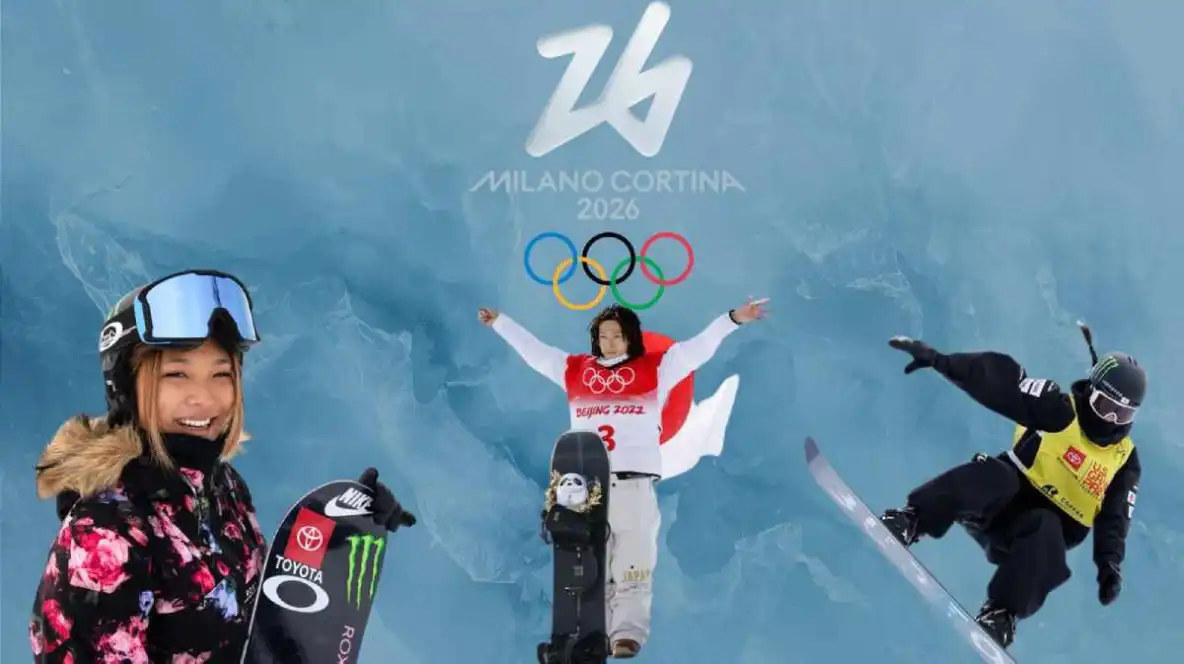
Chloe Kim enters the 2026 Olympics attempting something no snowboarder has accomplished. A third consecutive halfpipe gold would put her in legendary territory. Kim won at PyeongChang 2018 as a 17-year-old phenom, then defended her title at Beijing 2022.
Kim started snowboarding at age four when her parents bought her first board on eBay. Her father drove her 12 hours round trip every weekend to train at Mammoth Mountain in California. That dedication created one of the most dominant athletes in action sports history.
Her trick progression keeps pushing women’s halfpipe forward. In January 2024, Kim became the first woman to land a 1260 in halfpipe competition. A year later, she joined teammate Maddie Mastro as the first women to land double cork 1080s in contests. Kim has reportedly landed a 1440 in practice, though she has not yet attempted it in competition.
Kim won the 2025 World Championship halfpipe title, securing her spot on the U.S. team for Milan. Her eight X Games SuperPipe titles match Shaun White’s record. Victory in Milan would give her three straight Olympic golds, joining White as the only snowboarders with three halfpipe titles.
After Beijing 2022, Kim took a mental health break from competition. She has spoken openly about depression and anxiety. Returning refreshed, she emphasizes enjoying snowboarding rather than obsessing over results. That mindset shift has brought back her love for the sport.
Rising Challengers
South Korea’s Choi Gaon emerged as Kim’s biggest threat heading into Milan. The 17-year-old won both World Cup halfpipe events to start the 2025-26 season. In 2023, during Kim’s competition break, Choi broke Kim’s record as the youngest X Games halfpipe champion. Kim has mentored Choi, creating an intriguing rivalry between generations.
Japan fields strong teams across all snowboarding disciplines. Hirano Ayumu won men’s halfpipe gold at Beijing 2022 and returns as the favorite. His brother Hirano Kaishu also competes at the highest level. In slopestyle and big air, Japanese riders consistently challenge for medals.
New Zealand’s Zoi Sadowski-Synnott dominates women’s slopestyle and big air. She won slopestyle gold at Beijing 2022 and added bronze in big air. Her rivalry with Japan’s Murase Kokomo pushes both athletes to attempt harder tricks every season.
Red Gerard gives the United States medal hopes in slopestyle and big air. He won surprise gold at PyeongChang 2018 as a 17-year-old, becoming snowboarding’s youngest Olympic champion. After finishing fourth at Beijing 2022, the now 25-year-old veteran aims to return to the podium.
The Milan 2026 Setup
All snowboarding events at the 2026 Olympics take place in Livigno, located in the Upper Valtellina region of the Italian Alps. The Livigno Snow Park hosts five different courses for the various disciplines. This mountain town sits near the Swiss border at high elevation, ensuring reliable snow conditions.
Competition begins Thursday, February 5, 2026, with big air qualifying. The final snowboarding medal gets awarded on Wednesday, February 18. That gives fans nearly two weeks of snowboarding action throughout the Games.
The 11 medal events spread across the schedule:
- Big Air: February 5-9 (men’s and women’s)
- Parallel Giant Slalom: February 8 (men’s and women’s)
- Halfpipe: February 11-13 (men’s and women’s)
- Snowboard Cross: February 12-15 (men’s, women’s, and mixed team)
- Slopestyle: February 16-18 (men’s and women’s)
Fifty quota spots exist for halfpipe and 60 for slopestyle and big air, split equally between men and women. Athletes earn their spots through World Cup results and championship performances during the qualification period.
What Makes Snowboarding Special
Unlike traditional Olympic sports with centuries of history, snowboarding is barely 30 years old at the Games. That youth brings fresh energy. Riders express individual style through trick selection, clothing choices, and attitudes. The sport celebrates creativity alongside athletic achievement.
Snowboarding connects with younger audiences who might not care about figure skating or cross-country skiing. The tricks look incredible on television and social media. Athletes become celebrities with massive online followings. This crossover appeal helps the Winter Olympics reach viewers who otherwise might skip the Games entirely.
The culture remains slightly rebellious even at the Olympic level. Snowboarders competed for years in oversized clothing that looked nothing like traditional athletic uniforms. Music pumps during events. Athletes celebrate together regardless of nationality. The vibe differs from the formal atmosphere of many Olympic sports.
Looking Ahead
Snowboarding continues evolving rapidly. Tricks that seemed impossible five years ago now appear in every top run. Halfpipes have grown taller and steeper. Big air ramps launch riders higher than ever before. The physical demands increase each Olympic cycle.
Young riders from around the world now challenge American dominance. China, Japan, and European countries invest heavily in snowboarding programs. The talent pool deepens every season. Future Olympics may see medals spread across more nations than ever.
For Milan 2026, all eyes focus on Chloe Kim’s quest for a three-peat. But snowboarding delivers surprises every Games. First-time Olympians can win gold. Favorites can crash. The unexpected makes snowboarding must-watch television every four years.