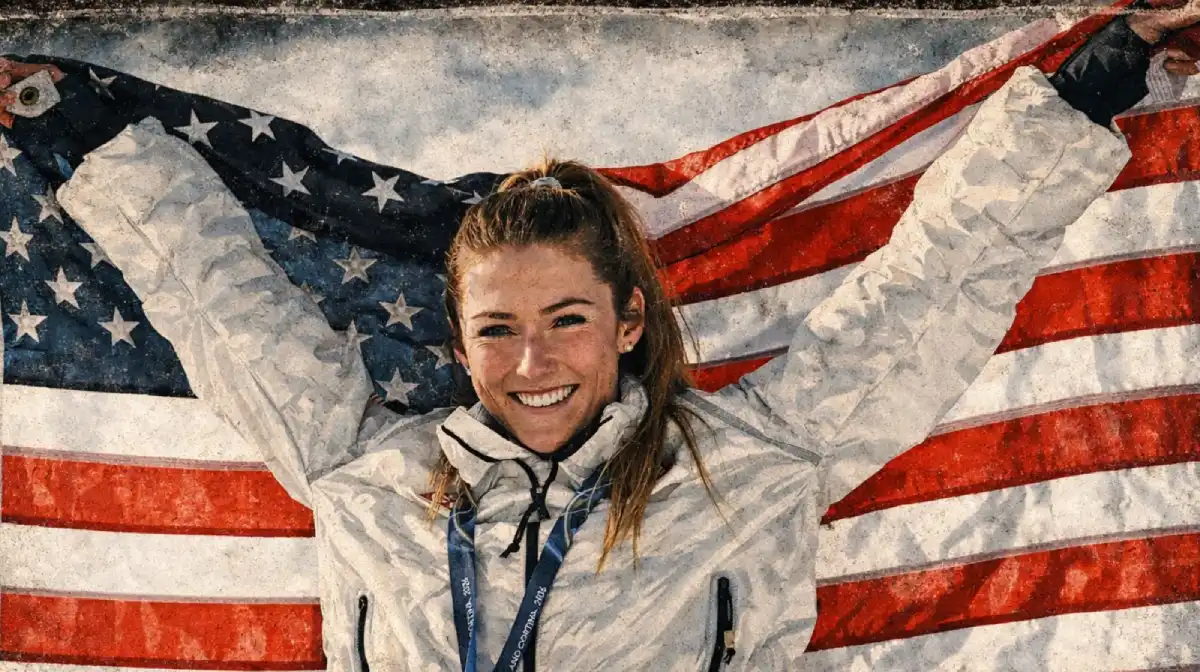
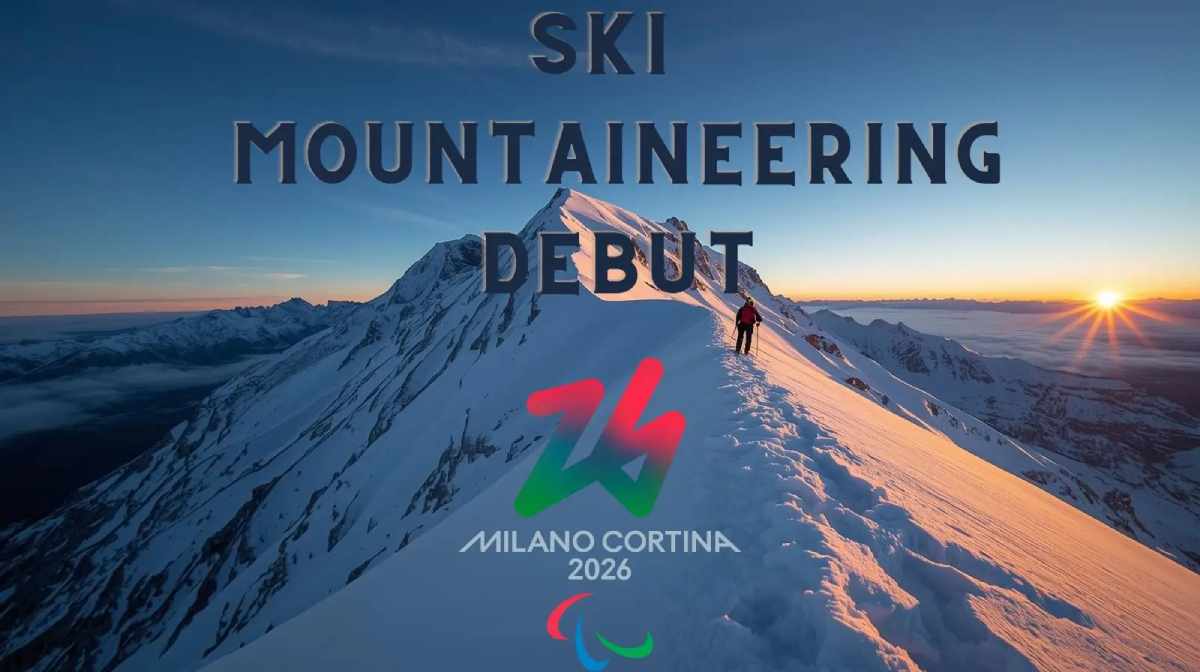
When athletes line up at the base of the legendary Stelvio slope in Bormio on February 19, 2026, they won’t be preparing for the downhill everyone expects. Instead, they’ll be strapping climbing skins onto their skis, preparing to race uphill — and history will be made.
Ski mountaineering, known simply as “skimo” to its devoted community, is the only new sport being added to the Milano Cortina 2026 Winter Olympics. And there’s a poetic symmetry to its debut: a discipline forged in the Italian Alps over a century ago will finally receive Olympic recognition on the very mountains where it was born.
What Exactly Is Ski Mountaineering?
Forget everything you know about watching skiers descend gracefully down pristine slopes. Skimo flips the script entirely.
Picture this: athletes explode from the starting gate and immediately begin climbing. Their skis are fitted with “skins” — strips of specialized fabric that grip the snow, allowing uphill travel. Then comes a bootpack section where competitors rip off their skis, strap them to their backs, and scramble up steep terrain on foot. Another transition, another climb, and finally — only finally — they tear off the skins and ski downhill through gates to the finish.
The entire sprint race takes roughly three minutes. Three minutes of maximum cardiovascular effort, technical equipment changes, and tactical decision-making. It’s brutal, beautiful, and utterly captivating.
Three Minutes of Controlled Chaos
The Olympic program features three medal events: men’s sprint, women’s sprint, and mixed relay.
The sprint format follows a knockout structure. Eighteen athletes qualify through heats, advancing through semifinals until six racers battle in the final. Every transition — skin on, skin off, boots in, boots out — can make or break a race. Elite athletes complete equipment changes in seconds, and a fumbled binding or tangled skin can cost a podium position.
The mixed relay adds another dimension. One woman and one man form a team, each completing the course twice before tagging their partner. It demands not just individual excellence but tactical coordination and the mental fortitude to recover from one explosive effort and immediately launch into another.
The Athletes to Watch
Emily Harrop (France) — The 27-year-old French-British athlete has dominated skimo like few others. A four-time World Cup overall champion, she swept all seven sprint World Cup races in the 2024-25 season, including the test event on the actual Olympic course in Bormio. Born in France’s Tarantaise Valley to English parents, Harrop originally trained as an alpine skier before an injury redirected her path. She has described the sprint race with characteristic directness: it’s a three-minute explosion of lactic acid, strategy, and suffering.
Thibault Anselmet (France) — Harrop’s compatriot and mixed relay partner, Anselmet has claimed three consecutive men’s overall titles. Together, they’ve won world championship gold in the mixed relay format twice. France arrives in Bormio as the team to beat.
Oriol Cardona Coll (Spain) — The reigning world sprint champion won the Olympic test event on the men’s side. Spain, not traditionally a winter sports powerhouse, could emerge with its first-ever skiing gold through Cardona Coll’s explosive finishing speed.
Nicolò Canclini (Italy) — Here’s where the story becomes irresistible. Canclini, a two-time world champion, grew up in Bormio. His family home sits 300 meters from the Olympic course. He has skied these mountains his entire life, trained on them obsessively, and now will compete for Olympic gold in front of his neighbors, his friends, and his entire community.
When asked about the pressure of racing at home, Canclini admitted the weight of expectations while embracing the opportunity: this is a unique chance for Bormio and for ski mountaineering to shine on the world stage.
Why Italy? Why Now?
The selection of Milano Cortina 2026 for skimo’s Olympic debut wasn’t accidental. The sport traces its competitive roots to the Italian Alps, where soldiers in World War I used ski mountaineering techniques to traverse harsh mountain terrain. The first World Championships were held in France in 2002, but the soul of the sport has always resided in these peaks.
The Olympic venue at Bormio’s Stelvio Ski Centre — better known as one of alpine skiing’s most demanding downhill courses — will host skimo on its upper slopes. The course designers created something unique: a track featuring raised banking and steep curves on the descent that resembles ski cross more than traditional alpine racing.
Athletes who tested the course praised its technical demands. The downhill section, with its high curves and aggressive terrain, rewards not just climbing strength but technical skiing ability. Position changes happen constantly. A racer leading into the final descent can be overtaken in the gates.
The Growth of a Movement
Skimo’s Olympic moment comes amid explosive growth in backcountry winter sports. Participation surged during the pandemic as outdoor enthusiasts sought uncrowded alternatives to resort skiing. Uphill skiing programs now exist at hundreds of ski areas worldwide.
But the competitive side has existed in the shadows, underfunded and largely unknown outside mountain communities. Athletes have spoken openly about the financial struggles of pursuing a sport without Olympic recognition or major broadcast deals.
Olympic inclusion changes the calculus entirely. New sponsors are already appearing. Young athletes in France, Switzerland, Italy, and Spain — the traditional skimo powers — now have a clear pathway from youth competition to Olympic glory.
The International Ski Mountaineering Federation approved qualification criteria in 2021 after a successful demonstration at the 2020 Youth Olympic Games in Lausanne. That showing convinced the IOC that skimo could captivate television audiences with its blend of endurance, technical skill, and head-to-head racing drama.
What to Expect in Bormio
The competition schedule runs from February 19-21. Men’s and women’s sprint qualifications begin the morning of February 19, with finals that afternoon. The mixed relay concludes the skimo program on February 21.
Expect France to dominate early betting odds, with Harrop and Anselmet favored in their respective sprints and overwhelming favorites in the mixed relay. But Spain’s Cardona Coll has proven he can beat anyone on his best day, and Switzerland’s deep roster of climbers and technical skiers makes them dangerous in every race.
Then there’s the home factor. Italian fans will pack the Stelvio slopes to cheer for Canclini and his teammates. In a sport decided by seconds — sometimes fractions of seconds — crowd energy matters.
More Than a Race
For the athletes who have dedicated careers to a sport most people couldn’t identify, February 2026 represents validation. Decades of training at dawn on frozen slopes, of explaining what they do to puzzled relatives, of competing for minimal prize money and even smaller crowds — all of it culminates in 18 men and 18 women racing for the first Olympic medals ever awarded in their discipline.
Emily Harrop captured the magnitude with characteristic understatement. She acknowledged the gold medal dream while emphasizing the step-by-step approach to reaching the Games. Then, she said, they’ll try as hard as possible.
For Canclini, standing at the start line 300 meters from home, the Olympics represent something even more personal. He has called Bormio the most beautiful place in the world, praising its mountain villages, thermal spas, and ski facilities — including the Stelvio slope where he’ll attempt to become Italy’s newest sporting hero.
The countdown has begun. Ski mountaineering is coming home.
Key Olympic Dates:
- February 19, 2026 — Men’s and Women’s Sprint
- February 21, 2026 — Mixed Relay
Venue: Stelvio Ski Centre, Bormio, Italy