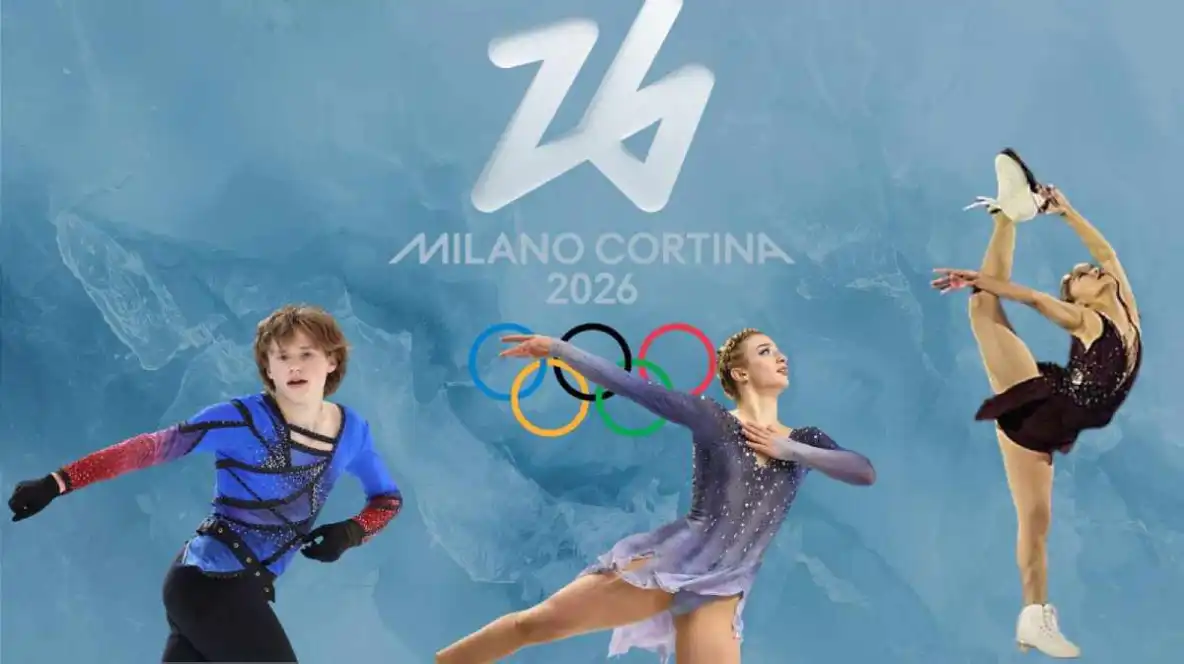
A sport so elegant it looks like art, yet so demanding it pushes athletes to their physical limits. Figure skating combines grace, power, and technical precision in ways no other Olympic event can match. When skaters take the ice at the 2026 Winter Olympics in Milan, they will continue a tradition that predates the Winter Games themselves.
The Oldest Winter Olympic Sport
Figure skating holds a unique place in Olympic history. It actually appeared at the Summer Olympics before the Winter Games even existed. The first Olympic figure skating competition took place at London 1908, with another held at Antwerp 1920. When the Winter Olympics began at Chamonix 1924, figure skating was naturally included and has been part of every Winter Games since.
This makes figure skating one of the oldest sports on the Winter Olympic program. Only hockey shares a similar timeline, having also appeared at those early Summer Games before becoming a Winter staple. The sport’s longevity speaks to its enduring appeal with audiences around the world.
At the 2026 Winter Olympics in Milan, figure skating competitions will take place at the Milano Ice Skating Arena in Assago. The venue holds over 11,000 spectators who will watch 142 athletes compete across five events over 12 action-packed days from February 6 to 21.
The Five Olympic Events
Figure skating at the Olympics includes five separate competitions, each testing different skills and formats:
- Men’s Singles: Individual male skaters perform short programs and free skates
- Women’s Singles: Individual female skaters perform short programs and free skates
- Pairs: A man and woman skate together, performing throws, lifts, and synchronized elements
- Ice Dance: Couples perform routines emphasizing rhythm, interpretation, and dance movements rather than jumps
- Team Event: Countries earn points from all four disciplines combined, added in 2014
The singles and pairs events have been part of every Winter Olympics. Ice dance joined the program in 1976. The team event is the newest addition, first appearing at Sochi 2014. It creates dramatic competition where strong performances in one discipline can lift an entire country’s medal hopes.
How Scoring Works
Modern figure skating uses the International Judging System, introduced after a scoring scandal at the 2002 Salt Lake City Olympics. Each element in a program receives a base value, and judges add or subtract points for execution quality. Skaters also receive program component scores for skating skills, transitions, performance, composition, and interpretation.
The short program requires specific elements performed in a set time. The free skate gives athletes more freedom and longer routines. Combined scores from both programs determine final rankings. In singles events, the short program is worth roughly one-third of the total score.
Technical specialists identify each element in real time, allowing judges to focus on quality. Video review helps catch any missed or incorrect calls. This system aims to make scoring more transparent and fair than the older 6.0 scale that judged entire performances subjectively.
Legendary Olympic Champions
Norwegian skater Sonja Henie stands alone in figure skating history. She won three consecutive Olympic gold medals in women’s singles at St. Moritz 1928, Lake Placid 1932, and Garmisch-Partenkirchen 1936. No other singles skater, male or female, has matched that achievement. Henie also won 10 consecutive World Championships from 1927 to 1936, a record that still stands today.
Henie revolutionized figure skating. She introduced ballet movements into her routines after seeing Russian ballerina Anna Pavlova perform. She wore shorter skirts that showed her movements better.
She turned figure skating from a stiff, formal exercise into an artistic performance that captivated audiences. After retiring from competition, she became a Hollywood movie star and popularized skating shows that toured the world.
Only one other woman has defended an Olympic singles title: Katarina Witt of East Germany won gold in 1984 and 1988. Her grace and charisma made her a global celebrity during the Cold War era.
Sweden’s Gillis Grafstrom won three gold medals in men’s singles across both Summer and Winter Olympics, at Antwerp 1920, Chamonix 1924, and St. Moritz 1928. American Dick Button won gold in 1948 and 1952, pioneering athletic jumps that transformed men’s skating.
The most decorated Olympic figure skaters overall are Canadian ice dancers Tessa Virtue and Scott Moir. They earned five Olympic medals across three Games: three golds in ice dance and the team event, plus two silvers. Their chemistry and storytelling on ice redefined what the discipline could achieve.
American Figure Skating Legacy
The United States has won 54 Olympic figure skating medals, more than any other country. That total includes 16 gold, 17 silver, and 21 bronze medals across all disciplines. American skaters have particularly excelled in singles events.
Dick Button became America’s first men’s singles champion in 1948, then defended his title in 1952. He invented the double axel and triple loop jumps that became standard elements for future generations. Peggy Fleming won gold in 1968 with performances that helped popularize the sport on American television. Scott Hamilton took gold in 1984, then founded the Stars on Ice tour that brought skating to arenas nationwide.
More recent champions include Kristi Yamaguchi, who won in 1992, and Nathan Chen, who claimed gold at Beijing 2022 with stunning quadruple jumps. Chen became only the sixth American man to win Olympic singles gold.
The 1994 Olympics remain infamous in American skating history. Nancy Kerrigan was attacked before the U.S. Championships in a plot connected to rival Tonya Harding. Kerrigan recovered to win silver at Lillehammer, while the scandal brought unprecedented attention to figure skating.
Russian and Soviet Dominance
Russia and the former Soviet Union built dynasties in pairs and ice dance. Irina Rodnina won three consecutive Olympic golds in pairs, at Sapporo 1972, Innsbruck 1976, and Lake Placid 1980. She and fellow three-time champions Sonja Henie and Tessa Virtue share the record for most Olympic figure skating golds by a woman.
Soviet and Russian pairs won Olympic gold at every Games from 1964 through 2006, a streak spanning 11 consecutive Olympics. Their training systems produced technically superior pairs teams for decades. Ice dance medals also flowed steadily to Russian and Soviet skaters throughout the discipline’s Olympic history.
However, Russian athletes face restrictions for the 2026 Games. Due to the ongoing situation in Ukraine, Russian and Belarusian skaters cannot compete under their national flags. This opens opportunities for skaters from other countries to reach the podium.
Stars to Watch in Milan 2026
American Ilia Malinin enters the 2026 Olympics as the most technically gifted men’s skater in history. In 2022, he became the first person ever to land a quadruple axel in competition. The quad axel is the hardest jump in skating because it requires four and a half rotations. Other skaters attempt four rotations on other jumps, but the axel’s forward takeoff makes that extra half-rotation incredibly difficult.
Malinin has also landed seven quadruple jumps in a single program, another feat no one else has accomplished. At just 20 years old, Milan 2026 will be his Olympic debut. He enters as the heavy favorite for men’s singles gold.
Japan’s Kaori Sakamoto dominated the women’s field heading into the Olympic season. She won back-to-back World Championships in 2023 and 2024, completing an undefeated season in 2023-24. Her combination of powerful skating and expressive performance makes her the woman to beat.
American Amber Glenn and Isabeau Levito will challenge Sakamoto. Japan’s Yuma Kagiyama and France’s Adam Siao Him Fa give the men’s event depth beyond Malinin. The ice dance and pairs events remain wide open with several teams capable of reaching the podium.
What Makes Figure Skating Special
No other Olympic sport blends athletics and artistry quite like figure skating. Skaters must master explosive jumps requiring incredible power and rotation speed. They must also glide gracefully, interpret music emotionally, and connect with audiences watching from the stands and at home.
The pressure is immense. Unlike timed sports where athletes race against clocks, figure skaters perform alone under spotlights with judges evaluating every movement. One fall can end medal dreams. The mental strength required matches the physical demands.
Yet that vulnerability creates magic. When everything comes together, figure skating produces unforgettable Olympic moments. A perfectly landed jump sequence. An emotional free skate set to soaring music. Tears of joy when scores flash on the screen. These moments explain why figure skating remains one of the most watched events at every Winter Olympics.
Looking Ahead to Milan
The 2026 Winter Olympics will showcase a new generation of figure skating talent. Stars like Malinin bring technical innovation that seemed impossible just years ago. Meanwhile, judges continue balancing athletic achievement against artistic expression in an ongoing debate about what makes skating great.
Qualification for Milan 2026 came through the 2025 World Championships and the ISU Skate to Milano qualifier in September 2025. Final entries were confirmed by late January 2026, setting the stage for two weeks of competition that will determine new Olympic champions.
Whether you appreciate the athletic feats, the artistic performances, or simply the beauty of movement on ice, figure skating at the Olympics offers something for everyone. When the music starts in Milan, another chapter in this sport’s remarkable history begins.