Picture this: a 44-pound granite stone glides silently across the ice while teammates frantically sweep the surface with brooms, screaming instructions at each other. Welcome to curling, the Winter Olympics’ most surprisingly addictive sport that turns viewers into passionate fans within minutes of watching.
Ancient Origins on Scottish Ice
Curling traces its roots to 16th century Scotland, where people slid stones across frozen ponds and lochs during harsh winters. The first curling club was established in 1716, making it one of the oldest organized sports in the world. Scottish immigrants brought the game to Canada in the 1800s, where it exploded in popularity.
The sport made its Olympic debut at the very first Winter Games in Chamonix, France, in 1924. After disappearing for decades and appearing only as demonstration events, curling returned as a full medal sport at the 1998 Nagano Games. Mixed doubles joined the program at PyeongChang 2018, giving fans even more curling action to enjoy.
How Curling Works
Each curling match consists of ten rounds called “ends.” Teams of four players take turns sliding granite stones toward a target called the “house.” The goal is to get your stones closer to the center button than your opponent’s stones.
Here is where it gets interesting. Two teammates sweep the ice in front of the moving stone to control its speed and direction. Sweeping creates friction that can make the stone travel farther or curve differently. The skip, who serves as team captain, stands at the far end shouting instructions about when and how hard to sweep.
After all 16 stones have been thrown in an end (eight per team), only one team scores. They earn one point for each stone closer to the center than the opponent’s closest stone. Matches typically last about two and a half hours.
The Roaring Game
Curling is nicknamed “The Roaring Game” because of the rumbling sound the granite stones make as they travel across the pebbled ice surface. Yes, the ice is intentionally bumpy. Workers spray tiny water droplets onto the surface before games, creating a texture that allows stones to curl, or curve, as they slow down.
The stones themselves are special. They come from just two places on Earth: Ailsa Craig, a small island off Scotland’s coast, and a quarry in Wales. The granite from these locations has unique properties that prevent it from absorbing water and cracking in cold temperatures.
Canada: The Curling Superpower
No country dominates curling like Canada. The nation has won 11 Olympic medals, including six gold. Curling is practically a national obsession there, with thousands of clubs scattered across the country. Canadian children grow up throwing stones the way American kids grow up shooting basketballs.
At the 2018 PyeongChang Olympics, Canada’s mixed doubles team of Kaitlyn Lawes and John Morris won the first-ever gold medal in that event. Lawes became a two-time Olympic champion, cementing her status as one of curling’s greatest players.
Sweden’s Dynasty
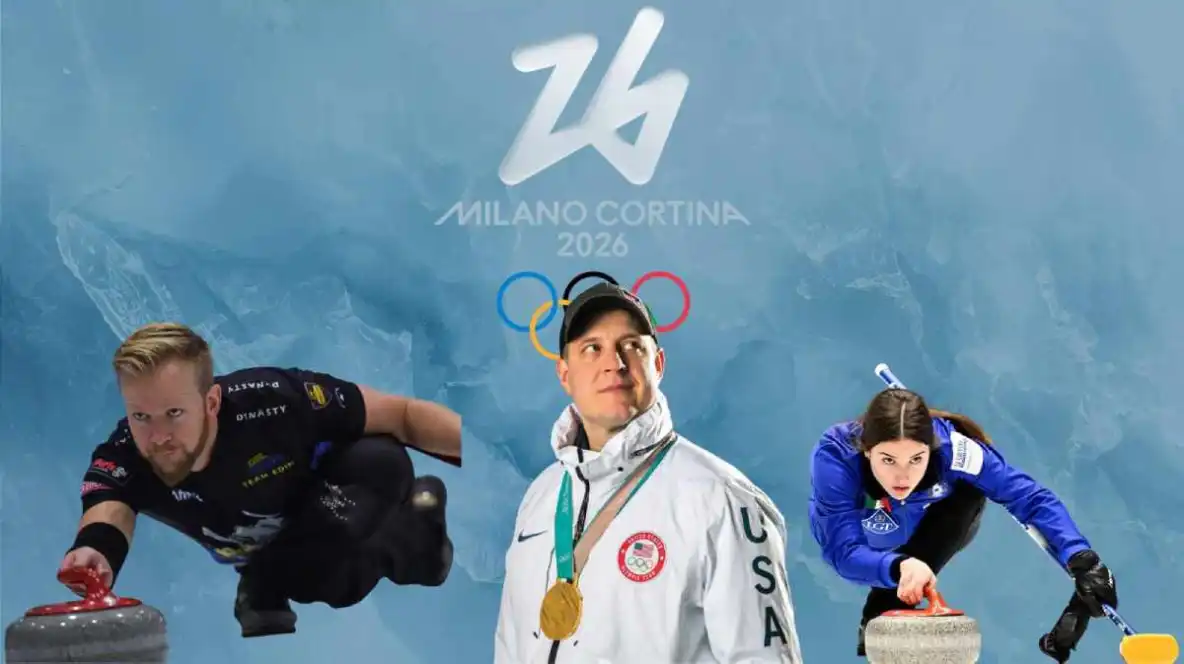
While Canada has the history, Sweden has dominated recent Olympics. Skip Niklas Edin has built a legendary career, winning seven World Championship titles and becoming the most decorated male curler in history.
Edin finally captured Olympic gold at Beijing 2022, completing his medal collection after silver in 2018 and bronze in 2014. Now 39, he returns to Milan seeking a second consecutive Olympic title. His team features the same core players who have competed together for over a decade, giving them unmatched chemistry.
Team USA’s Miracle Run
American curling had its breakthrough moment at PyeongChang 2018. Team Shuster, led by skip John Shuster, entered the tournament with low expectations after a rocky start. They lost four of their first six games and needed a near-miracle to reach the medal round.
Then something clicked. The team nicknamed “The Rejects” because they had been dropped from USA Curling’s high-performance program won their final five games. In the gold medal match against heavily favored Sweden, they scored five points in a single end to seal a stunning 10-7 victory.
It was the first Olympic curling gold for any American team and just the second Olympic medal for the United States ever. Shuster became a national celebrity, appearing on talk shows and inspiring a new generation of American curlers.
Italy’s Home Ice Advantage
Host nation Italy will have extra motivation in the mixed doubles event. At Beijing 2022, Stefania Constantini and Amos Mosaner delivered Italy’s first-ever Olympic curling medal, and it was gold. They went undefeated throughout the tournament, shocking traditional powers.
Now they return with home crowd support in Cortina d’Ampezzo, where all curling events will take place. The pressure to repeat will be immense, but playing in front of Italian fans could provide the boost they need.
Switzerland’s Consistency
Switzerland might be the most consistent curling nation in recent years. The Swiss women’s team, led by skip Silvana Tirinzoni, won gold at Beijing 2022 and enters Milan as defending champions. Tirinzoni’s team has also captured multiple World Championship titles.
The Swiss men’s program continues to produce competitive teams as well. Switzerland has quietly accumulated seven Olympic curling medals across all events, placing them among the sport’s elite nations.
Predictions for Milan 2026
Men’s Curling Prediction: Sweden’s Niklas Edin, already the most decorated male curler in Olympic history, goes for a second consecutive gold. His experience and his team’s chemistry give them the edge. Canada and Great Britain battle for the other medals. Edin takes gold, with Canada earning silver and Great Britain bronze.
Women’s Curling Prediction: Switzerland’s Silvana Tirinzoni leads the defending champions back to the podium. Sweden and Canada will push them hard, but Switzerland’s consistency and big-game experience wins out. Switzerland takes gold, Sweden silver, and Canada bronze.
Mixed Doubles Prediction: Italy shocked the world with gold in 2022. Now with true home ice advantage in Milan, Stefania Constantini and Amos Mosaner are favorites to defend their title. The passionate Italian crowds will create an electric atmosphere. Italy wins gold, with Norway taking silver and Sweden bronze.
Why Curling Captivates
Curling’s appeal lies in its accessibility and drama. Unlike sports requiring superhuman athleticism, curling looks like something regular people could try. The strategy resembles chess on ice, with teams constantly adjusting their approach based on stone positions.
The final ends of close matches deliver incredible tension. One perfectly placed stone can steal victory from the jaws of defeat. The sportsmanship is refreshing too. Players call their own fouls and congratulate opponents on great shots.
When the stones start sliding in Milan, millions of new fans will discover what curling enthusiasts have known for centuries: this ancient Scottish game is absolutely mesmerizing to watch.