
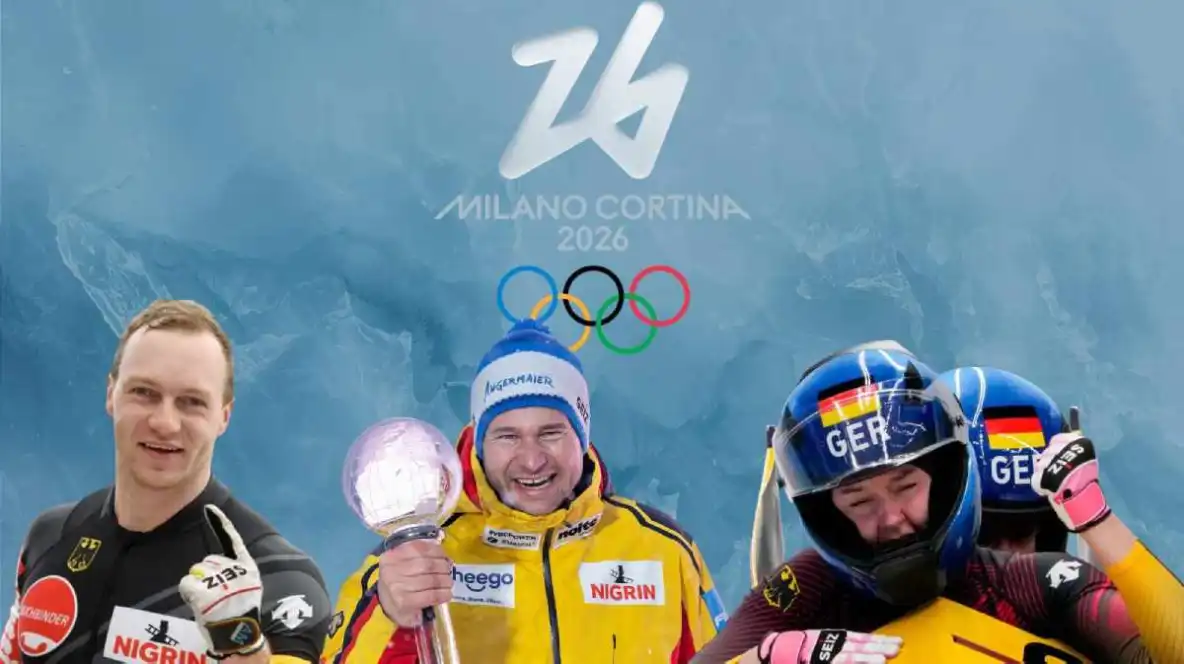
Four athletes squeeze into a sleek sled, sprint down an icy runway, then dive headfirst into a frozen chute at speeds that would terrify most race car drivers. Welcome to bobsled, where teams rocket down twisting tracks at over 150 kilometers per hour with nothing but skill and courage keeping them on course.
A Swiss Invention Takes the World Stage
Bobsled was born in Switzerland during the late 1860s when creative thrill-seekers welded two skeleton sleds together and added a steering mechanism. The sport quickly gained popularity among wealthy tourists visiting Swiss mountain resorts, who loved the adrenaline rush of racing down icy roads.
The four-man bobsled became an Olympic sport at the very first Winter Games in Chamonix, France, in 1924. The two-man event joined the program at Lake Placid in 1932. Women had to wait much longer for their chance. The two-woman event debuted at Salt Lake City in 2002, and monobob, where a single female pilot races alone, made its first appearance at Beijing 2022.
At Milan 2026, all bobsled events will take place at the Cortina Sliding Centre, a brand new track built specifically for these Games. The venue is named after Italian bobsled legend Eugenio Monti, a two-time Olympic gold medalist who remains one of the sport’s most celebrated figures.
How Bobsled Works
A bobsled race begins with pure explosive power. The crew sprints alongside their sled for about 50 meters, reaching speeds of 40 kilometers per hour in less than six seconds before jumping in. This push start is absolutely critical because every hundredth of a second at the top translates to time gained at the bottom.
Once inside the sled, the pilot takes control using two D-rings connected to the front runners. These steering ropes allow tiny adjustments that make huge differences at high speeds. The brakeman sits in the back but cannot use the brake until after crossing the finish line. That brake, equipped with metal teeth that dig into the ice, is only for stopping safely.
Races consist of four runs spread across two days. Officials add up all four times, and the fastest total wins. Weight limits keep competition fair. Teams must balance having powerful athletes who can push hard against staying under the maximum allowed weight for sled and crew combined.
Germany’s Unstoppable Machine
If one country owns Olympic bobsled, it is Germany. The Germans have won 30 medals, including 14 gold, the most of any nation. Their development system produces champion after champion, and their engineering expertise creates some of the fastest sleds on ice.
The current king of bobsled is Francesco Friedrich, a German pilot who has dominated the sport since 2016. He swept gold in both the two-man and four-man events at the 2018 and 2022 Olympics. He has won world championship titles in nearly every year since taking over as Germany’s top pilot. If Friedrich wins double gold again in Milan, he will cement himself as arguably the greatest bobsled pilot of all time.
Friedrich’s teammate Johannes Lochner pushes him hard. Lochner finished second in the 2024-25 World Cup standings and took silver at the 2025 World Championships, finishing just three-hundredths of a second behind Friedrich. Their internal competition makes Germany even stronger.
On the women’s side, Laura Nolte has emerged as the dominant force. The German star swept both the monobob and two-woman world championship titles in 2024-25 while topping the World Cup standings with five victories. She has also won four consecutive European titles, making her the clear favorite for Milan.
Team USA’s Medal Hopes
The United States has a proud bobsled history with 28 Olympic medals, including eight gold. American fans still remember when Steven Holcomb piloted the USA to a historic gold medal in the four-man event at Vancouver 2010, ending a 62-year drought.
Heading into Milan, two American women carry the nation’s best medal hopes. Elana Meyers Taylor is already the most decorated Black athlete in Winter Olympic history. The five-time Olympian has won three medals but never gold. At 41, Milan represents likely her final chance to stand atop the podium.
Kaillie Humphries brings an interesting story. Born in Canada, she won Olympic gold in 2010 and 2014 representing her home country. After switching allegiances to the United States, she won monobob gold at Beijing 2022. Humphries can tie the all-time record of four Olympic bobsled gold medals in Milan.
The rising star is Kaysha Love. A former sprinter, she made her Olympic debut as a brakewoman in 2022 before transitioning to pilot. In just two seasons behind the wheel, Love captured World Cup wins, set a track record in Lillehammer, and won monobob gold at the 2025 World Championships in Lake Placid. At 27, her best years may still lie ahead.
Historic Nations and Underdogs
Switzerland holds the record for most total bobsled medals with 31, reflecting the sport’s origins in the Swiss Alps. Legends like Gustav Weder built Switzerland’s reputation as a bobsled power. While the Swiss have not dominated in recent decades, they remain competitive at every Olympics.
Canada and Latvia have emerged as consistent medal threats. Great Britain’s Brad Hall has pushed into the conversation against the German stars. Even nations like Jamaica and Nigeria have captured global attention with their groundbreaking Olympic appearances, proving that bobsled dreams can come from anywhere.
Italy enters its home Games hoping the new track provides an advantage. The Italians have not been consistent medal contenders recently, but competing on a venue named after their greatest bobsled hero could inspire a breakthrough performance.
The Four Events at Milan 2026
Milan will feature four bobsled events. The two-man and four-man competitions showcase traditional team bobsled, where powerful push crews give pilots a fast start. The two-woman event follows the same format with female crews. Monobob, the newest addition, challenges solo female pilots to push, steer, and race entirely on their own.
The monobob event has generated excitement since its 2022 debut. Without teammates to help push, pilots must possess both explosive sprinting ability and precise steering skills. It has become one of the most demanding individual tests in all of sliding sports.
Predictions for Milan 2026
Two-Man Bobsled: Francesco Friedrich continues his dynasty with a third consecutive gold. Johannes Lochner takes silver, with Great Britain’s Brad Hall battling for bronze.
Four-Man Bobsled: Germany sweeps again as Friedrich leads his crew to gold. Canada’s rebuilt program, led by pilot Pat Norton, surprises with a bronze medal.
Two-Woman Bobsled: Laura Nolte dominates for Germany, taking gold. Elana Meyers Taylor finally earns her elusive gold? Not quite, but she grabs silver in an emotional final Olympics. Lisa Buckwitz makes it a German 1-3 with bronze.
Monobob: This is the wildcard event. Kaysha Love’s momentum from her 2025 World Championship gold makes her the favorite. She edges Kaillie Humphries in a thrilling USA 1-2 finish, with Germany’s Nolte taking bronze.
Why Bobsled Captivates
Bobsled combines raw power with surgical precision. The push start requires Olympic-level sprinting ability. The driving demands split-second reactions at terrifying speeds. Teams must trust each other completely because one mistake sends everyone crashing into walls.
The crashes, when they happen, are spectacular and scary. Sleds flip, slide upside down, and sometimes disintegrate. Yet athletes climb out, check on their teammates, and often race again the next day. The courage required to continue after a crash defines the bobsled mentality.
When the sleds start flying at the Cortina Sliding Centre in February 2026, you will witness athletes pushing the limits of speed and bravery. The thunder of runners on ice, the blur of national colors streaking past, and the roar of the crowd make bobsled one of the Winter Olympics’ most thrilling spectacles.