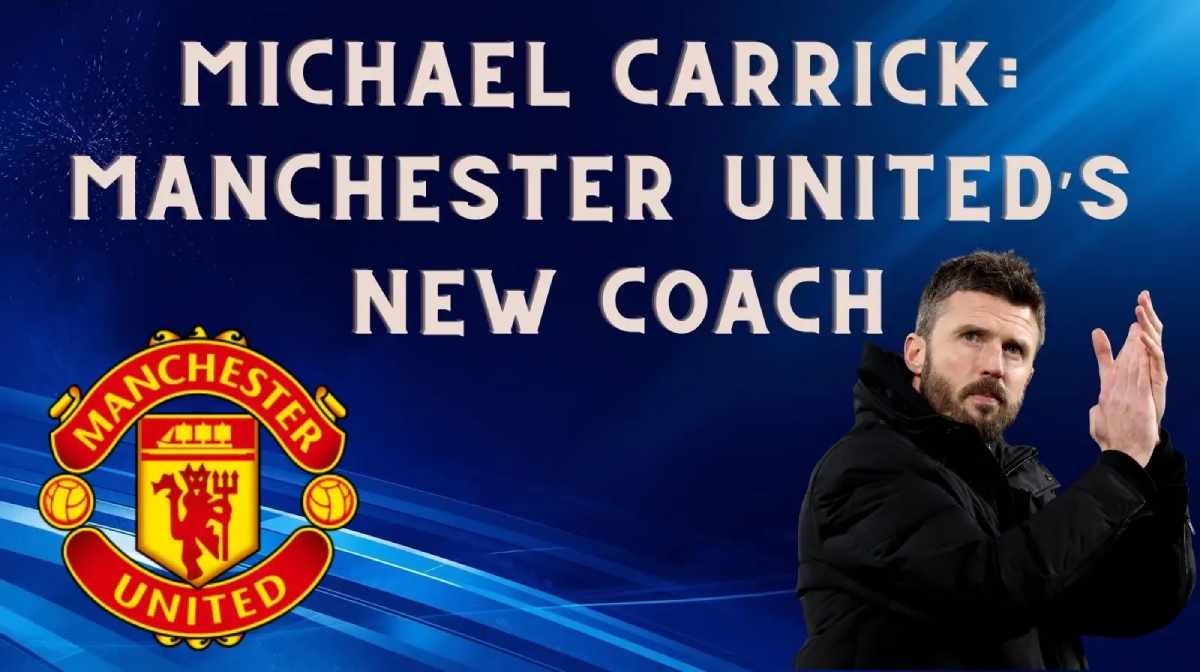
Manchester United have turned to one of their own. Michael Carrick, the 44-year-old former club captain and five-time Premier League champion, was officially appointed head coach on January 13, 2026, tasked with salvaging a season that has lurched from one crisis to the next.
His return comes just days after Ruben Amorim’s dismissal following a dismal 14-month tenure that produced the worst win rate of any permanent manager in the club’s Premier League history. With United seventh in the table, 17 points adrift of leaders Arsenal, and out of both domestic cup competitions, the Theatre of Dreams desperately needed someone who understands what it means to win at this football club.
Carrick is that man. But this isn’t sentiment speaking; it’s evidence.
The Ferguson Blueprint: How Sir Alex Shaped Carrick’s Managerial Philosophy
The relationship between Michael Carrick and Sir Alex Ferguson extends far beyond the 464 matches they shared at Old Trafford. When Carrick took the Middlesbrough job in October 2022, he revealed something telling about their bond.
“I spoke to Sir Alex a few times. I’ve spoken to him more since I stopped playing – I didn’t want to get too close to him when I was a player,” Carrick admitted. “I thought I knew football to a point until I got to United, and it taught me a whole different way of living, breathing, how to play football, how to win, and it all stemmed from the boss.”
Ferguson reportedly backed Carrick over Ole Gunnar Solskjær for this interim role, and the reasoning makes sense. While Solskjær represented the emotional heartbeat of Ferguson’s teams, Carrick embodied their tactical intelligence. Louis van Gaal called him his “trainer coach during the game” – a player who could read patterns and adjust strategy in real time.
That Ferguson connection runs deeper still. United CEO Omar Berrada and director of football Jason Wilcox met with Ferguson over breakfast to discuss the appointment, seeking his counsel on three former players who had all worn the red shirt under his watch. When the decision landed on Carrick, it came with the blessing of the greatest manager English football has ever produced.
The Formula One Obsession Nobody Talks About
Here’s something most supporters don’t know about their new head coach: Michael Carrick’s UEFA Pro Licence thesis wasn’t about football at all. It was about Formula One.
Former United academy coach Paul McGuiness revealed that Carrick studied motorsport tactics extensively, conducting interviews with Red Bull drivers Mark Webber and Daniel Ricciardo as part of his research. The parallels he drew between F1 strategy and football management reveal a mind that thinks differently about the game.
Formula One rewards precision under pressure, split-second decision-making, and the ability to adapt strategy mid-race based on changing conditions. These principles have permeated Carrick’s coaching methodology. At Middlesbrough, his teams played with a methodical patience that could suddenly shift into devastating counter-attacks, much like a racing driver managing tyre wear before unleashing maximum pace at the crucial moment.
It explains why his football often looks so controlled yet remains capable of explosive moments of attacking brilliance.
The Player Developer: Morgan Rogers, Chuba Akpom, and United’s Young Talent
Perhaps Carrick’s most underrated quality is his ability to transform players. At Middlesbrough, he didn’t just manage a squad; he rebuilt careers.
Chuba Akpom arrived at the Riverside Stadium as a failed Arsenal academy product who had bounced around Europe. Under Carrick’s guidance, he became the Championship’s leading scorer with 29 goals, earning a move to Ajax. The secret? Carrick repositioned him as a number 10 rather than a traditional striker, unlocking a creative dimension nobody knew existed.
Morgan Rogers cost Middlesbrough £1 million. Six months later, after thriving under Carrick’s tutelage, Aston Villa paid £16 million for his services. He’s now one of the most exciting young English talents in the Premier League.
Emmanuel Latte Lath followed a similar trajectory, joining for £4 million and departing for more than £20 million after Carrick maximised his potential.
For United supporters frustrated watching talented youngsters stagnate, this track record matters enormously. Kobbie Mainoo, Alejandro Garnacho, and Rasmus Højlund could all benefit from a coach who specialises in individual development rather than rigid tactical systems.
Why He Walked Away in 2021: The Loyalty That Defines Carrick
When Carrick oversaw those three memorable matches as caretaker in November 2021, beating Villarreal and Arsenal while drawing at Stamford Bridge against the European champions, many expected him to stay on Ralf Rangnick’s staff. He refused.
Sources close to those conversations say Carrick rejected the offer out of loyalty to Ole Gunnar Solskjær, the manager who had just been sacked. He didn’t want to appear as though he was benefiting from his friend’s misfortune. That decision cost him valuable time at the highest level of the game.
It’s a character trait United fans should appreciate. In an era of mercenary appointments and coaches angling for bigger jobs, Carrick demonstrated that personal integrity matters more than career advancement. He stepped away, took time to reassess, and only returned to management when an opportunity arose that aligned with his values.
That same quiet dignity will be essential at Old Trafford, where egos have run rampant and trust between players and management has completely broken down.
The Tactical Revolution: Back Four, Beautiful Football, and What Changes Immediately
If you’ve grown tired of watching United’s three-at-the-back system produce historically poor results, relief arrives immediately. During his 124 Championship matches at Middlesbrough, Carrick deployed a 4-2-3-1 formation in 112 of them. The back three featured just five times.
His teams ranked first among ever-present Championship clubs for goals, shots, expected goals, successful passes, and touches in the opposition box. They averaged 55.2% possession, second-highest in the division. This is front-foot, dominant football designed to wear opponents down through technical superiority.
The style carries echoes of Barcelona under Pep Guardiola or Xavi’s recent teams – possession-based, patient in build-up, but ruthless when opportunities appear. Some analysts have noted tactical similarities between Carrick’s approach and modern Spanish methodology, though he adds an English directness that creates balance.
Bruno Fernandes, who struggled under Amorim’s system, should flourish in the number 10 role Carrick favours. Mainoo gets the deep-lying midfield position that suits his passing range. The wingers actually play as wingers again.
Critics argue Carrick can be tactically inflexible, too committed to his principles when adjustments are needed. He acknowledged this perception at Middlesbrough: “I’m not going to change the style of play, it is what I know and what I believe in.” After Amorim’s stubbornness produced catastrophic results, United supporters might reasonably worry about history repeating.
But there’s an important distinction. Carrick’s system actually produces attacking, entertaining football that fans can believe in. Even if results occasionally disappoint, at least the performance level should improve dramatically.
The Coaching Team: Steve Holland and the Experience Factor
Carrick hasn’t arrived alone. His backroom staff includes Steve Holland, Gareth Southgate’s assistant throughout his eight-year England reign, a coach renowned for his demanding standards and tactical acumen.
Holland brings something Carrick’s Middlesbrough tenure lacked: elite-level experience. One source described him as “cold and aloof” but acknowledged his crucial role in England’s run to two European Championship finals. He’s the detail-oriented taskmaster who complements Carrick’s more composed presence.
Jonathan Woodgate, who worked alongside Carrick at Middlesbrough, provides continuity. Jonny Evans, still playing at 36, offers unique player-coach perspective from within the dressing room. Travis Binnion steps up from United’s Under-21s, ensuring the pathway from academy to first team remains connected.
Darren Fletcher, who led the team for two matches as caretaker, returns to the Under-18s by choice. He turned down a first-team role to continue his development as a coach, a decision the hierarchy respects enormously.
The Mountain to Climb: Champions League or Bust
Let’s be clear about the task facing Michael Carrick. United sit seventh, three points behind Liverpool in fourth but carrying significantly inferior goal difference. Seventeen Premier League matches remain, starting with Saturday’s Manchester derby at Old Trafford before a trip to league leaders Arsenal.
The fixture list offers no respite, but there’s historical precedent for optimism. Carrick won 12 of his first 17 matches at Middlesbrough, transforming a relegation-threatened side into playoff contenders. His brief 2021 caretaker spell produced victories against top European opposition when the squad desperately needed stability.
More importantly, he understands this isn’t about imposing a philosophy over five years. This is about restoring confidence, reconnecting players with supporters, and finishing the season strongly enough to secure Champions League qualification.
“I know what it takes to succeed here,” Carrick said upon his appointment. “There is still a lot to fight for this season. We are ready to pull everyone together and give the fans the performances that their loyal support deserves.”
For United supporters who have endured managerial chaos, tactical confusion, and performances utterly unbefitting of this football club, those words offer something increasingly rare at Old Trafford: genuine hope.
Michael Carrick may be the quiet man, but the revolution he’s bringing could be anything but silent.