There are Champions League finals that arrive with a neat little label already tied around them. The rematch. The coronation. The revenge mission. The clash of styles. The “surely they can’t do it again?” game.
Arsenal vs Paris Saint-Germain in Budapest is greedy enough to be all of them at once.
On one side, Arsenal: newly crowned Premier League champions, rebuilt, hardened, slightly less romantic than some of their fans might like, but far more difficult to kill. On the other, PSG: defending European champions, still floating around with that faintly terrifying “we might just pass through your midfield like it’s a hotel lobby” energy.
And the best part? These two already know each other’s tells.
Less than 13 months ago, PSG knocked Arsenal out in the Champions League semifinals, winning 1-0 in north London and 2-1 in Paris. That sounds tidy enough, until you remember the tie itself was anything but. Arsenal created loads. PSG had their moments. Donnarumma pulled off the sort of saves that make you question whether goalkeepers should be allowed to have arms that long.
The numbers, in fact, suggested Arsenal could feel a bit aggrieved. Not robbed, exactly. More like they left the restaurant convinced they’d ordered better than the table next to them and somehow still paid more.
So here we are again. Same opponent. Different Arsenal. Slightly different PSG. Very different stakes.
The basic plot is almost too clean. PSG are the slick, elastic, shape-shifting machine. Arsenal are the upgraded, broad-shouldered, title-winning machine who have discovered that beauty is nice, but clean sheets and set pieces also pay the mortgage.
That’s the tension. That’s the final.
Arsenal Have Changed — And Not Quietly
The Arsenal of last season were good. This Arsenal are more uncomfortable to play against. There’s a difference.
Mikel Arteta has not merely added players; he’s changed the texture of the team. The club spent heavily, and you can see why. This side now has more ways to win. They can press. They can sit. They can bully. They can take the ball. They can live without it. They can turn a free-kick near the touchline into a full existential event for the opposition.
That, more than anything, is what makes this Arsenal interesting. They are no longer trying to prove they can play lovely football. They’ve done that. They’ve had the elegant patterns, the pretty rotations, the young-core romance. This version feels like the sequel where the hero comes back with a scar, a new coat, and much less patience.
The defence tells you plenty. William Saliba remains the calm centre of the universe, but around him the cast has shifted. Gabriel is back. The left-back position looks stronger. Midfield has more gears, with Martín Zubimendi offering control and Eberechi Eze giving Arsenal another route into chaos when the usual routes are blocked. Noni Madueke adds directness. Up front, Arteta has the Havertz-Gyökeres decision, which is basically the tactical version of choosing between a Swiss army knife and a battering ram.
Neither choice is perfect. That’s what makes it fun.
Havertz is the tidier fit if Arsenal expect to suffer. He can press, link, hold the ball, and help Arsenal climb the pitch in those difficult spells when PSG are making everyone chase shadows. Gyökeres, meanwhile, offers something cruder and potentially more devastating: running power, aggression, nuisance value, and the possibility of turning a tired centre-back into a traffic cone after 70 minutes.
The temptation is obvious: start Havertz, then unleash Gyökeres later when the game has loosened and PSG’s defenders have started making those little tired decisions that end up in slow-motion replays. Arteta, of course, will probably have considered this from 19 different angles, then stared at a whiteboard until it confessed.
PSG Are Still PSG, Which Is the Problem
The thing about PSG is that they no longer feel like a vanity project trying to win Europe through vibes and expensive attackers. That era was box office, yes, but it always had the feeling of a luxury car being driven across a farm track.
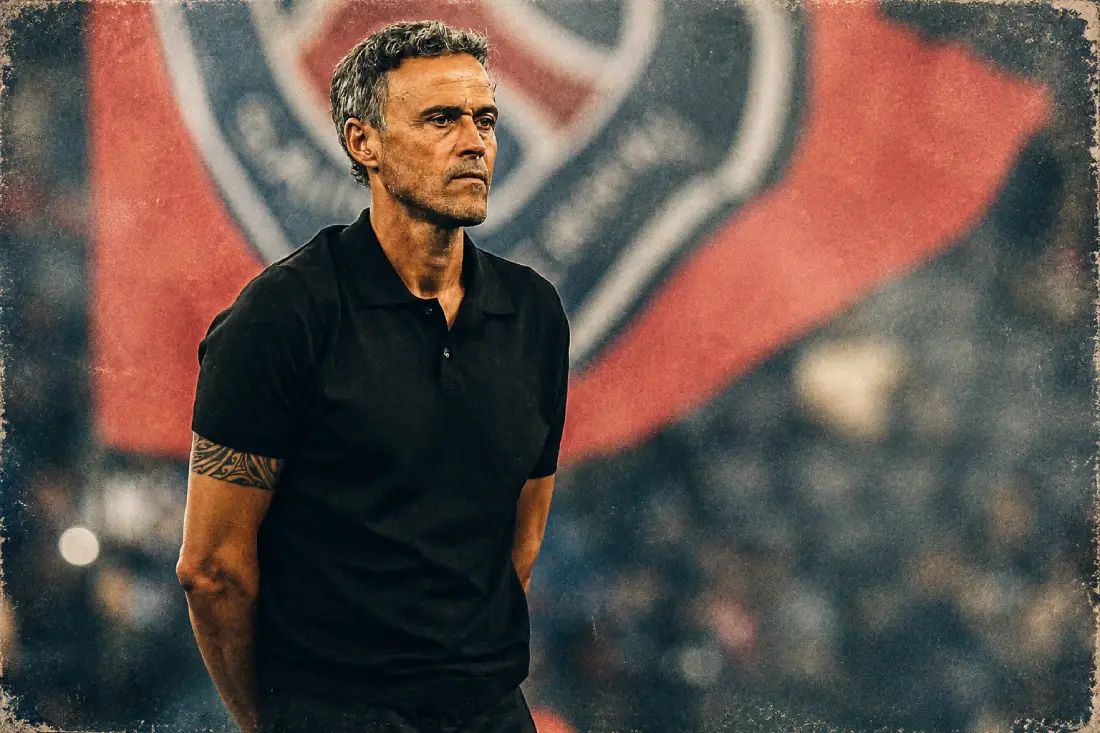
This PSG are different. Luis Enrique has made them coherent. Worse than that, he has made them coherent while still being fun.
They are fluid without being flimsy. Their forwards rotate constantly. Their full-backs behave like midfielders, wingers and occasional burglars. Their midfield can keep the ball until the opposition begins to look emotionally compromised. It is all very elegant, until you realise elegance is just another form of violence when performed at this speed.
Khvicha Kvaratskhelia is the obvious danger. He has been, by most accounts, the outstanding player in this Champions League campaign: goals, assists, invention, nerve. He plays as if the pitch is full of doors only he can see. If Arsenal really do have to use Cristhian Mosquera at right-back, then that duel becomes the bit of the film where everyone in the cinema quietly sits up.
And it may not even be just Kvaratskhelia. That’s the cruelty of PSG’s front line. You prepare for Kvara, and suddenly Dembélé is there. You adjust, and Désiré Doué drifts across. You think you’ve got one winger isolated, then two of them appear on the same side and your full-back starts looking like a man who opened the wrong email attachment.
This is where Arsenal’s shape, discipline and emotional control matter. Not just defending well. Defending without panic. Defending without giving PSG those little free samples around the box: a cheap foul, a lazy tackle, a second ball not attacked properly. Against some teams, you survive those. Against PSG, you’re suddenly watching a replay of Nuno Mendes celebrating near the corner flag.
The Right Flank Problem, Sponsored by Anxiety
Every final has a zone where the match might quietly tilt. This one has a giant flashing arrow pointing at right-back.
Arsenal are not fully happy there. Jurriën Timber has been out. Ben White is unavailable. Mosquera is probably the sensible option, because at least he is a natural defender, but “natural defender” and “ready to deal with PSG’s left side in a Champions League final” are not the same sentence, however much you squint.
That said, PSG have their own issue. Achraf Hakimi is trying to get fit, and even if he makes it, he may not be fully sharp. If he doesn’t, Warren Zaïre-Emery can play there, and he has done it plenty, but he is not Hakimi. He doesn’t give PSG the same thrust, the same timing, the same sense that he has just appeared from another dimension to overlap at the exact worst moment.
So Arsenal can hurt PSG there too. This is not a one-way street. Saka against Nuno Mendes is the headline duel, but Arsenal’s left side could become very important, especially if PSG’s right-back situation is patched together rather than polished.
The funny thing about finals is that we talk for days about philosophy, identity and history, then the game turns because someone’s emergency right-back misjudges the flight of a diagonal ball in the 64th minute. Football loves making fools of grand themes. It’s one of its better qualities.
The Weird Kick-Off Thing Is Not Actually Weird
One of the more fascinating PSG quirks is their habit of booting the ball straight out of play from kick-off. At first glance, this feels like something your Sunday league team does because three players are still tying their boots.
But there’s method in it. PSG use it to squeeze the pitch, push high, trap the opponent from the throw-in, and establish the game where they want it. It’s not about creating a shot immediately. It’s about territory, pressure, and control. Luis Enrique has essentially turned giving the ball away into a possession strategy, which is both clever and deeply annoying.
Could they use it to crowd Saka’s side early? Quite possibly. Could they do something similar from goal-kicks, aiming towards Arsenal’s right flank to force Mosquera into uncomfortable decisions? Also yes.
This is the sort of detail that sounds minor until the final starts and Arsenal spend the first four minutes trapped near their own corner flag, with Arteta doing that intense touchline crouch that suggests he is either analysing the press or trying to mentally move someone three yards to the left.
Arsenal’s Best Route? The Oldest Trick in the Book
For all the tactical nuance, Arsenal’s clearest path to goal might be beautifully obvious: set pieces.
This is where they can make PSG feel mortal. Corners. Wide free-kicks. Second balls. The entire grim little catalogue. Arsenal have become exceptional at turning dead-ball situations into psychological warfare. Against a goalkeeper like Matvei Safonov, who has performed well but is not Gianluigi Donnarumma, the temptation to crowd, test and harass him will be enormous.
And why not? Finals are not purity tests. Nobody hands back the trophy because the winning goal came from a centre-back’s shoulder after a messy corner. In fact, that’s almost more satisfying. The Champions League final does not ask how stylish you were. It asks whether you survived the night with your name on the cup.
Arsenal will still need moments in open play. Saka has to threaten Mendes. Rice has to impose himself without getting dragged into chasing. Havertz, if he starts, has to make the ball stick when Arsenal finally get out. But set pieces feel like the lever. Pull it enough times and something might break.
What Does It Mean?
For Arsenal, winning this would be the greatest season in the club’s history. There’s no need to dress it up. Premier League title after two decades, then a first Champions League? That is not just a good year. That is statues, murals, documentaries, and grown adults pretending they only had something in their eye.
And while this final has enough drama to carry the whole weekend by itself, there’s plenty more build-up, reaction and beautifully unnecessary football anxiety waiting over on our main football page.
For PSG, the prize is different but just as huge. Back-to-back Champions League titles would move them into properly historic territory. Not “wealthy club finally got it right” territory. Not “great team for a season” territory. Real European dynasty territory.
Real European dynasty territory. Luis Enrique would also strengthen his case as one of the defining managers of the modern era, which feels fair enough given he has somehow made PSG look both disciplined and joyful. That is not an easy combination. Ask anyone who has tried to organise a group dinner.
So Who Wins?
This feels tight. Much tighter than anyone expecting PSG to simply pass Arsenal into dust might imagine.
Arsenal are better equipped than last year. They are deeper, stronger, more flexible, and probably less emotionally naive. They can suffer. They can score from very little. They can drag PSG into the sort of match where every throw-in feels like paperwork and every corner feels like a legal summons.
But PSG have the higher ceiling in open play. Their best 20-minute spell might be better than anyone else’s in Europe. If they find rhythm, if Kvaratskhelia gets Mosquera backing up, if Mendes starts arriving like an uninvited guest at the far post, the match could tilt quickly.
That’s the final in one sentence: Arsenal can make it awkward enough to win; PSG can make it beautiful enough to take away.
My head says PSG, narrowly. My suspicion says Arsenal will make them suffer horribly first. My fear, on behalf of anyone who enjoys a calm Saturday evening, is that this becomes one of those finals where every tactical prediction survives about eight minutes.
Prediction: PSG 2-1 Arsenal.
But if Arsenal win it from a set piece after 83 minutes, don’t act surprised. That ending has been sitting there all week, wearing shin pads.