A French player scored the very first goal in World Cup history. Nearly a century later, France is still at the center of everything in world football.
Les Bleus are heading to the 2026 World Cup in North America with one of the most talented squads any nation has ever assembled. They have the most dangerous attacker on the planet. They have experience in winning the biggest games. And they have a manager who knows exactly what it takes to lift the trophy, because he has already done it as both a player and a coach.
But there is a twist to this story. Didier Deschamps has announced that the 2026 World Cup will be his last tournament in charge. After 14 years leading France, this is his farewell tour. And he wants to go out on the highest note possible.
This is everything you need to know about France heading into the 2026 FIFA World Cup.
Les Bleus and the World Cup: A Love Story for the Ages
France has one of the richest World Cup histories of any nation. The 2026 tournament will be their 17th appearance, and the story goes all the way back to the very beginning.
On July 13, 1930, France played in the first ever World Cup match against Mexico. Lucien Laurent scored the opening goal of that game, making it the first goal in World Cup history. Think about that for a second. Every World Cup goal ever scored, from Pele to Maradona to Messi, traces back to a Frenchman.
France has won the World Cup twice. The first came in 1998 on home soil, when Zinedine Zidane scored two headers in a 3-0 demolition of Brazil in the final. That tournament united a nation and made Les Bleus the most beloved team in France.
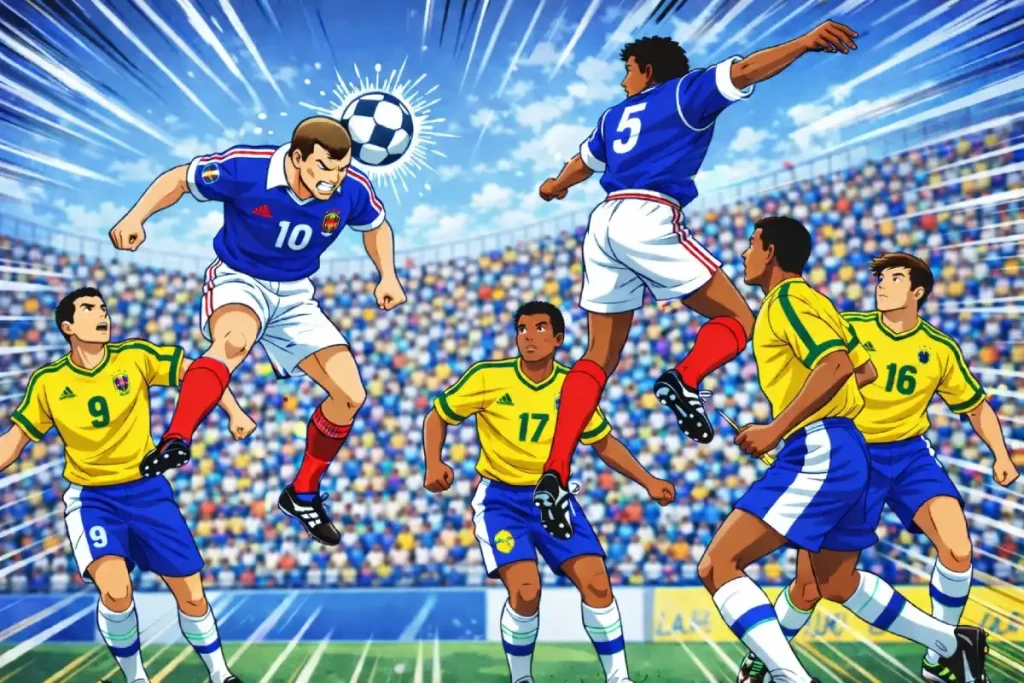
Twenty years later, Deschamps guided a new generation to glory in Russia, with a young Kylian Mbappé bursting onto the world stage as France beat Croatia 4-2 in the 2018 final.
They have also reached two other finals. In 2006, Zidane’s infamous headbutt on Marco Materazzi ended France’s hopes against Italy in a penalty shootout. And in 2022, they came agonizingly close to defending their title. Mbappé scored a hat-trick against Argentina in what many consider the greatest World Cup final ever played, but France lost on penalties.
It has not always been glory, though. France crashed out in the group stage in 2002 without scoring a single goal, including a shocking opening loss to Senegal. And in 2010, the squad imploded in South Africa amid player revolts against manager Raymond Domenech. But those dark chapters make the victories even sweeter.
Here is a stat that puts France’s World Cup pedigree in perspective. Just Fontaine holds the record for the most goals scored at a single World Cup, netting 13 times in just six matches at the 1958 tournament. Nobody has come close to matching that in over 60 years.
Road to 2026: Clinical and Convincing
France made qualifying for this World Cup look easy. Placed in UEFA Group D with Ukraine, Iceland, and Azerbaijan, they dominated from start to finish.
Deschamps’ side won five of their six qualifying matches and drew the other, finishing top of the group with 16 points. They scored 16 goals and conceded just five across the campaign. It was the kind of controlled, professional qualifying run that you expect from a two-time world champion.
The campaign opened in September 2025 with a 2-0 win away to Ukraine, where Mbappé and Michael Olise both found the net. Four days later, France held off a tricky Iceland side 2-1 in Paris, with Mbappé’s penalty and a Bradley Barcola goal doing the job despite Aurélien Tchouaméni picking up a red card.
October brought more comfortable results. Azerbaijan were swept aside 3-0 at home before France drew 2-2 in Iceland with a rotated squad and without Mbappé, who was rested due to injury. Christopher Nkunku and Jean-Philippe Mateta scored in that match to earn a point.
The night France officially qualified was November 13, 2025. They destroyed Ukraine 4-0 at the Stade de France, with Mbappé scoring twice, Olise adding one, and Hugo Ekitiké getting in on the act late on. The stadium erupted. Qualification was sealed with a game to spare.
Deschamps rotated his squad for the final match, a 3-1 win away to Azerbaijan, giving fringe players valuable minutes. It was a job well done.
The Night Qualification Became Official
November 13, 2025. Stade de France, Paris. This was the night France punched their ticket to North America, and they did it in style.
Ukraine arrived knowing they needed a result to keep their own qualification hopes alive. They got absolutely nothing.
France controlled the game from the opening whistle. The defense was solid. The midfield was sharp. And the attack was devastating. Mbappé opened the scoring with a penalty in the 55th minute after a foul in the box. Then Olise made it two with a brilliant strike in the 76th minute. The floodgates opened.
Mbappé grabbed his second of the night in the 83rd minute, marking his 399th and 400th career goals. At 26 years old, he became the youngest player to reach 400 career goals since Pele in 1964. Let that sink in. Then Ekitiké added a fourth in the 88th minute to put the cherry on top.
Final score: France 4, Ukraine 0. Qualification confirmed. Five wins from five at that point in the campaign. The Stade de France was rocking, and Deschamps allowed himself a rare smile on the sideline. His final World Cup was secured.
The Stars Lighting Up Deschamps’ Farewell
France might have the deepest squad at the entire tournament. The talent pool is almost unfair.
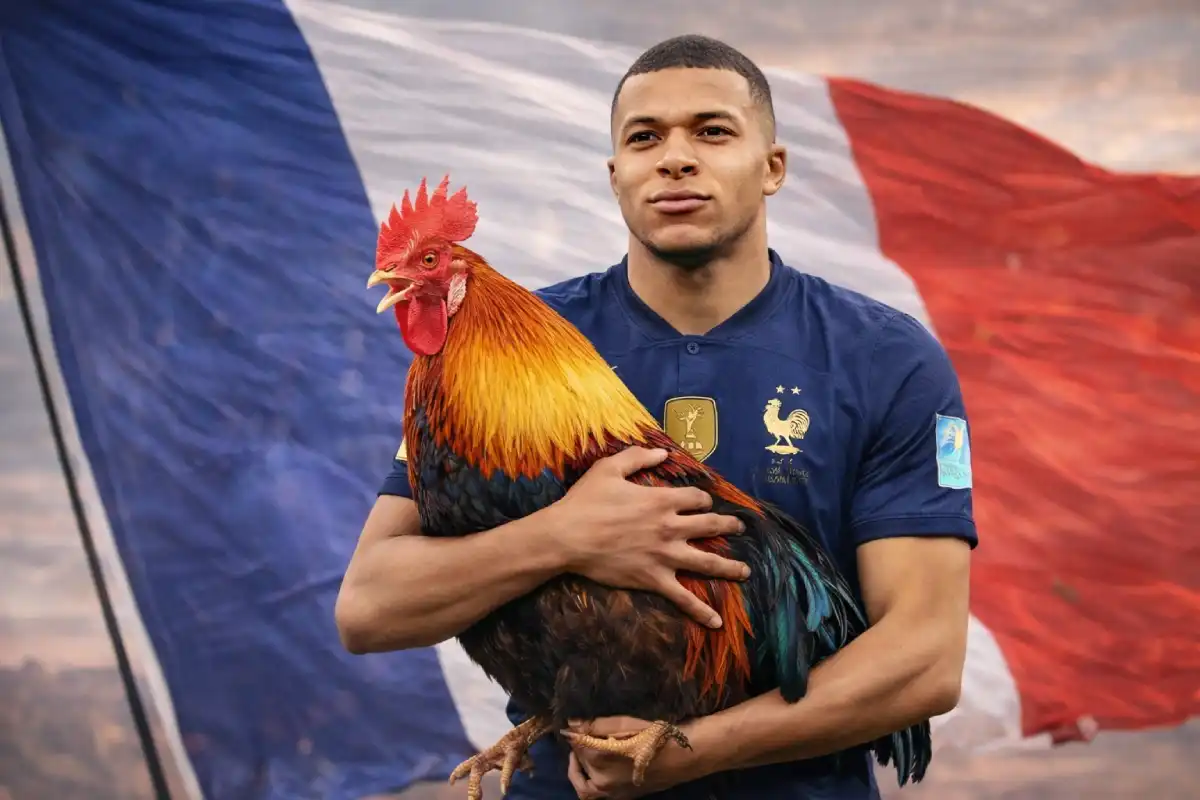
Kylian Mbappé is the headliner and he needs no introduction. The Real Madrid forward and France captain has 55 international goals, making him the country’s second all-time top scorer behind only Olivier Giroud. He scored five times during qualifying.
At 27 during the tournament, Mbappé has already racked up 12 World Cup goals across two tournaments, including that unforgettable hat-trick in the 2022 final. He is tied for sixth on the all-time World Cup scoring list. Only Miroslav Klose, Ronaldo, Gerd Muller, Just Fontaine, and Lionel Messi have scored more. Defenders worldwide will be losing sleep over facing him.
Michael Olise has established himself as a key creative force for Les Bleus. The Bayern Munich winger scored twice in qualifying and brings flair, vision, and an eye for goal from wide positions. He is one of the most exciting young talents in European football.
Ousmane Dembélé gives France another dangerous option on the wing. The PSG star was part of the 2018 World Cup-winning squad and brings years of big-game experience.
Aurélien Tchouaméni is the midfield engine. The Real Madrid defensive midfielder provides structure and protection for the back line. He picked up a red card in qualifying against Iceland but his importance to this team is massive.
William Saliba has become one of the best center-backs in the world at Arsenal. His composure and reading of the game make France’s defense one of the strongest at the tournament.
Mike Maignan is the number one goalkeeper. The AC Milan shot-stopper has been consistently excellent and gives France a reliable last line of defense.
Jean-Philippe Mateta proved himself during qualifying with goals in consecutive starts. The Crystal Palace striker became the first player since Louis Saha in 2004 to score in his first two appearances for France, giving Deschamps a reliable backup option up front.
And there is depth everywhere. Jules Koundé, Ibrahima Konaté, Theo Hernández, Eduardo Camavinga, Bradley Barcola, Christopher Nkunku, and Rayan Cherki are all fighting for places. Most of these players would walk into the starting lineup of almost any other national team on the planet.
The Man Behind It All: Didier Deschamps
Didier Deschamps is the most successful manager in French football history, and this will be his final act.
Appointed in July 2012, Deschamps has been in charge for over 13 years. He is the only living person to have won the World Cup as both a player and a manager.
He captained France to glory in 1998 and then led them to the title again in 2018. Only Mario Zagallo of Brazil and Franz Beckenbauer of Germany achieved the same feat, and both have since passed away.
His record with France reads like a greatest hits album. He guided them to the Euro 2016 final on home soil, won the 2018 World Cup, claimed the 2021 Nations League, and reached the 2022 World Cup final. That is four consecutive major tournament semifinals or better at one point.
Deschamps’ tactical approach is pragmatic and effective. He typically sets France up in a 4-2-3-1 formation that prioritizes defensive solidity while unleashing his attackers on the counter. Critics sometimes call his style boring, but results speak louder than style points. And when France click going forward, they are capable of destroying anyone.
In January 2025, Deschamps confirmed this would be his final tournament. “I have done my time,” he told French broadcaster TF1. “2026 is a very good time to stop.” Zinedine Zidane is widely expected to take over after the World Cup. But first, Deschamps wants one more trophy to add to his collection.
Can France Go All the Way?
France enters the 2026 World Cup as one of the clear favorites to win it all. And they should be.
The squad depth is absurd. They can rotate world-class players in and out of the team without losing quality. The experience of reaching back-to-back World Cup finals in 2018 and 2022 gives this group a mental edge that most teams simply do not have.
The expanded 48-team format with more knockout rounds could actually benefit France. They have the squad size to handle a longer tournament without fatigue becoming a factor. Other nations might struggle with depth over seven games. France will not.
The fact that this is Deschamps’ farewell adds an emotional layer. Players often raise their game when they are playing for something bigger than just a trophy. Sending their legendary manager out as a World Cup champion would be the perfect ending to an incredible story.
The biggest threat might actually come from within. France’s pragmatic style was heavily criticized at Euro 2024, where they scored just one goal from open play by a French player in the entire tournament. If Deschamps gets the balance wrong between defense and attack, frustration could creep in.
But with Mbappé in this kind of form, scoring goals should not be a problem.
World Cup 2026 Group Stage: A Familiar Foe Awaits
France landed in Group I alongside Senegal, Norway, and the winner of FIFA Playoff 2 (Iraq, Bolivia, or Suriname). The draw delivered some fascinating storylines.
| Match | Date | Opponent | Venue | Time (ET) |
|---|---|---|---|---|
| 1 | June 16, 2026 | Senegal | New York/New Jersey Stadium, East Rutherford | 3:00 PM |
| 2 | June 22, 2026 | FIFA Playoff 2 Winner | Philadelphia Stadium, Philadelphia | 5:00 PM |
| 3 | June 26, 2026 | Norway | Boston Stadium, Foxborough | 3:00 PM |
The opening match against Senegal carries serious historical baggage. Back in 2002, Senegal stunned France 1-0 in the opening game of that World Cup, one of the biggest upsets in tournament history. France went on to crash out without scoring a single goal. Deschamps will want no repeat of that nightmare.
Norway will be the other big test. Erling Haaland versus Kylian Mbappé is one of the most mouth-watering individual battles you can find in world football. Two generational strikers going head to head on the biggest stage. That final group game could be an absolute classic.
The match against the playoff winner should be the most manageable fixture, but France cannot afford complacency. Getting nine points from three games and topping the group would be the ideal scenario.
Prediction
France will reach the semifinals.
They have the talent to win the whole thing, absolutely. But there is something about the pressure of being favorites combined with the emotional weight of Deschamps’ farewell that could trip them up in the latter stages.
Expect France to cruise through the group stage with maximum or near-maximum points. The Round of 32 and Round of 16 should not cause them major problems either. But a semifinal against one of the other heavyweights, whether it is Brazil, England, Argentina, or Spain, could be where the ride ends.
A World Cup final is very much within reach. But predicting France to actually win the tournament feels like tempting fate, given the heartbreak of 2022.
One thing you can count on, though, is that this France team will provide drama, brilliance, and unforgettable moments. Deschamps’ last dance deserves nothing less.
Allez les Bleus.