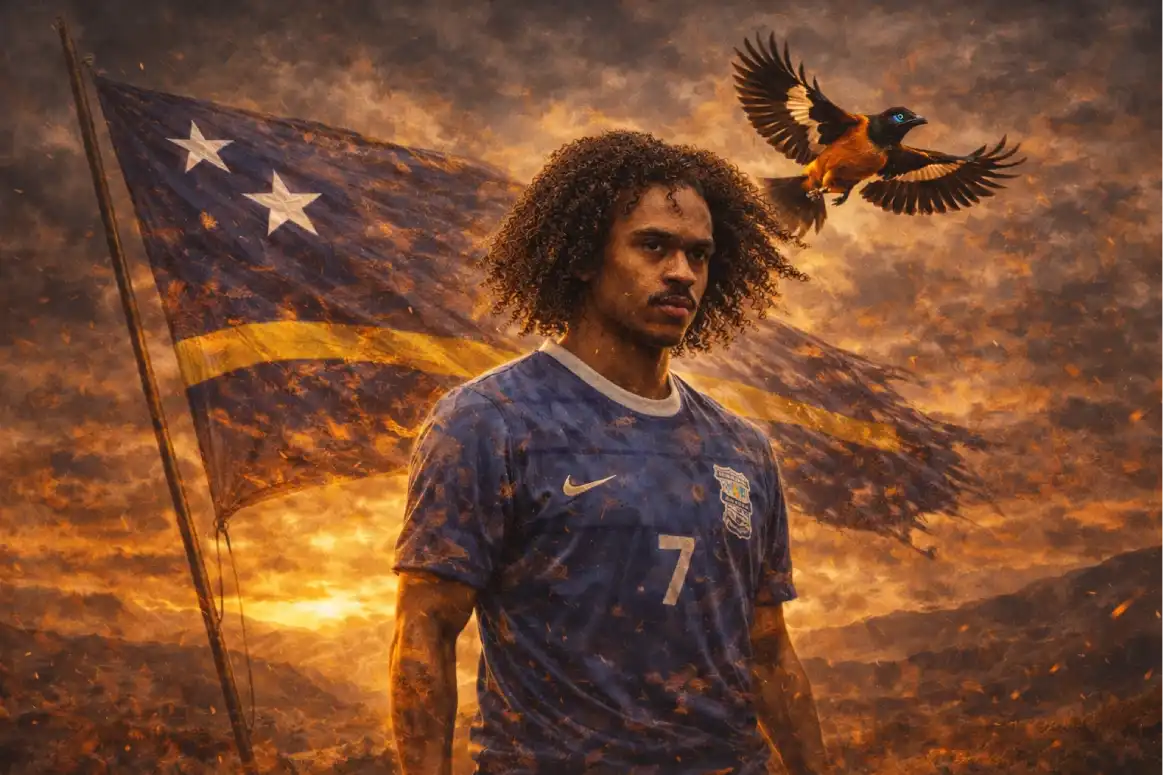
If you look strictly at the numbers, it shouldn’t be possible. A Caribbean island with a population of 150,000, a number that wouldn’t fill the Camp Nou and Old Trafford combined, is heading to the World Cup.
Curaçao, a rock in the Caribbean Sea covering just 171 square miles, has defied the odds, the critics, and the history books. By qualifying for the 2026 FIFA World Cup, they have officially become the smallest nation by both population and area to reach the finals, snatching that mantle from Iceland and Trinidad & Tobago respectively. They have eclipsed the “Viking Clap” fairytale of 2018 and written an underdog story that might just be the greatest the sport has ever seen.
However, as the “Blue Wave” prepares for kickoff, the story has taken a dramatic twist: the man who built the dream will not be there to see it through.
The Coaching Crisis: A Shock Departure
On February 23, 2026, just four months before the opening whistle, Dick Advocaat officially resigned. Citing his daughter’s health as his only priority, the veteran tactician has passed the torch to fellow Dutchman Fred Rutten. While Advocaat engineered the qualifying masterpiece from his living room, Rutten, the former PSV and Feyenoord boss, will be the one standing on the touchline in Houston.
From Antillean Roots to Independent Glory
While 2026 marks Curaçao’s debut on the biggest stage, the island’s relationship with the sport is deceptively old.
Curaçao is an autonomous country within the Kingdom of the Netherlands, a status shared by Aruba and Sint Maarten. The island’s first representative team took the field as far back as 1924, dispatching Aruba 4-0. However, for the better part of the 20th century, the island’s footballing identity was subsumed under the banner of the Netherlands Antilles. It wasn’t until that political entity was dissolved in 2010 that Curaçao inherited the FIFA membership and began forging a path as a distinct footballing nation.
The early years of independence were a grind. As recently as 2003, the team was languishing at 188th in the FIFA rankings. But the project slowly gained traction, utilizing the diaspora of Dutch-born players with island heritage. The 2017 Caribbean Cup was the first major breakthrough, where they edged Jamaica 2-1 to lift the trophy. A quarterfinal run at the 2019 Gold Cup proved that wasn’t a fluke.
Those were stepping stones. November 2025 was the destination.
Qualifying Run: The Undefeated Path to 2026
Curaçao didn’t just sneak into the World Cup through a back door; they kicked the front door down. They navigated the entire qualifying cycle without a single defeat.
The campaign kicked off in the CONCACAF Second Round, where Curaçao made short work of Group C. Faced with Barbados, Aruba, Saint Lucia, and Haiti, they took maximum points, scoring 15 goals and conceding just two. It started with a 4-1 win over Barbados and a routine 2-0 derby win over Aruba. Gervane Kastaneer’s hat trick headlined a 4-0 thrashing of Saint Lucia, and they capped the round by dismantling Haiti 5-1.
The Final Round was where the difficulty spiked. Placed in Group B alongside regional powerhouses Jamaica, Trinidad and Tobago, and Bermuda, the margin for error evaporated. Only the group winner would secure an automatic ticket.
After a gritty 0-0 draw away in Trinidad and a nervy 3-2 home win over Bermuda, the team produced their signature moment in October. Playing at the Stadion Ergilio Hato on Curaçao Day (a national holiday) they hosted favorites Jamaica.
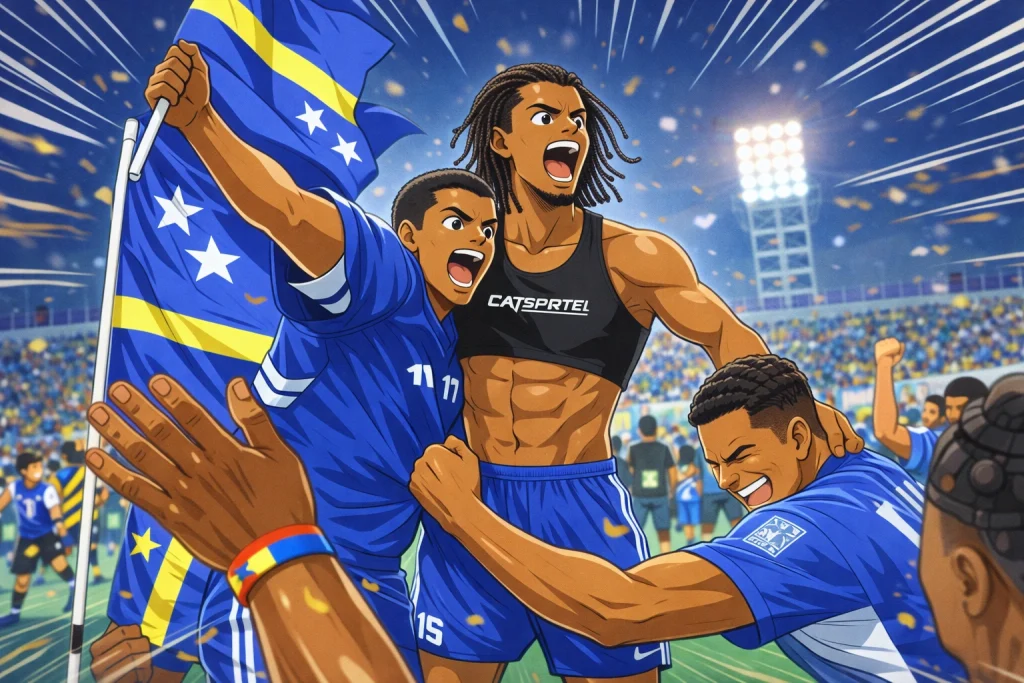
The atmosphere was electric, and the team delivered a stunning 2-0 upset. Livano Comenencia’s long-range strike in the 14th minute set the tone, and Kenji Gorré provided the cushion in the second half, while goalkeeper Eloy Room was immense between the sticks. A follow-up draw in Trinidad left them top of the table, setting the stage for a dramatic November window.
The Turning Point: 7-0 vs Bermuda
On November 13, 2025, at the Dame Flora Duffy National Sports Centre, Curaçao didn’t just win; they put on a clinic.
Captain Leandro Bacuna calmed the nerves early with a sixth-minute penalty. His brother, Juninho, doubled the advantage before the break with a trademark blast from distance. But the second half is what fans will talk about for decades.
Jordi Paulina, coming off the bench for his international debut, announced himself to the world. The 21-year-old won and converted a penalty in the 48th minute, then watched Sontje Hansen tap in a fourth. Paulina grabbed his second shortly after, becoming the youngest player in the nation’s history to score a brace in World Cup qualifying.
By the time Ar’Jany Martha and Roshon van Eijma added late goals to make it 7-0, the message was clear. Curaçao needed just a point from their final game in Kingston to make history.
That final match on November 18 was a masterclass in suffering. For 90 minutes, Jamaica threw everything at them. The woodwork rattled three times, with headers off the post and shots off the crossbar. In stoppage time, a penalty call for Jamaica threatened to ruin everything, only for VAR to intervene and overturn the decision.
When the final whistle confirmed the 0-0 draw, the celebrations began. The smallest nation ever had booked their flight.
Key Players to Watch: The Golden Generation
The squad list reads like a scouting report of Dutch academies, but for the fans in Willemstad, these names have become family.
- Leandro Bacuna (The Captain):
- The Professional: At 34, he is the undisputed leader. Currently plying his trade with Igdir FK in Turkey’s second tier, he brings grit to the midfield.
- Fan Pulse: Known affectionately by Aston Villa fans for the cult “Chicken Bhuna” chant, Bacuna is seen by Curaçaoans as the “Glue.” While he once chased Champions League glory, fans now respect him for doing the dirty work in CONCACAF away games that allow the younger stars to shine.
- Gervane Kastaneer (The Globetrotter):
- The Finisher: He finished as the top scorer in qualifying with five goals.
- Fan Pulse: Kastaneer is the definition of a “National Team Player.” His club career recently took him on a surprise adventure to Terengganu FC in Malaysia (signing in Jan 2026), where he scored on his debut just last week. Fans love that no matter where he plays on the globe, he transforms into a lethal weapon the moment he puts on the blue shirt.
- Tahith Chong (The Native Son):
- The Star: The former Man Utd prospect now at Sheffield United provides the Premier League quality.
- Fan Pulse: Chong holds a special place in the hearts of the “Blue Wave” support because he is one of the few players actually born in Willemstad (unlike the majority of the Dutch-born squad). His switch of allegiance in August 2025 wasn’t just a paperwork change; fans saw it as a true “homecoming.”
- Jordi Paulina (The Viral Sensation):
- The Wildcard: The 21-year-old earned a move to Fortuna Düsseldorf in January 2026.
- Fan Pulse: He became an overnight internet sensation after his debut against Bermuda. Fans were stunned not just by his two goals but by the audacity of a debutant demanding to take a penalty and burying it. That confidence is exactly what fans believe the team needs against Germany.
The Tactical Revolution: Advocaat’s Foundation, Rutten’s Future
The arrival of Dick Advocaat in 2024 marked a distinct departure from Curaçao’s traditional reliance on individual flair. He implemented a rigid ‘Dutch-Concacaf’ hybrid system prioritizing defensive shape over possession stats. This pragmatism transformed Curaçao into a tournament-hardened unit.
Now, under Fred Rutten, the “Blue Wave” may find a new gear. Known for a more fluid 4-3-3 system, Rutten is expected to keep Advocaat’s defensive foundation while encouraging a more aggressive attacking style. If Advocaat gave this team its shield, Rutten is here to sharpen the sword.
Fan Reaction & Cultural Impact: The ‘CorenDick’ Phenomenon
While the tactical discipline was forged in Europe, the heart of this team remains distinctly Caribbean. Fan forums have been buzzing about the cultural collision between the 78-year-old disciplinarian Advocaat and a squad that thrives on rhythm and flair. This contrast was best highlighted by the team’s primary sponsor, Corendon, playfully rebranding to “CorenDick” for a day. This viral moment cemented the manager’s cult hero status in Willemstad.
Even as Rutten takes over, the “CorenDick” era will be remembered as the moment the island truly believed the impossible was happening.
Online, the “Blue Wave” movement has galvanized a diaspora of over 150,000 Dutch-Curaçaoans, many of whom traveled to Jamaica to witness the decisive defensive masterclass that secured their ticket to 2026.
Group E: David vs. The Goliaths
The December draw in Washington, D.C. was harsh, placing Curaçao in Group E with Germany, Ecuador, and Ivory Coast.
| Match | Date | Opponent | Venue |
|---|---|---|---|
| 1 | June 14, 2026 | Germany | Houston Stadium (Houston, TX) |
| 2 | June 20, 2026 | Ecuador | Kansas City Stadium (Kansas City, MO) |
| 3 | June 25, 2026 | Ivory Coast | Philadelphia Stadium (Philadelphia, PA) |
Opening against Germany is as tough as it gets. The four-time champions will look to make a statement, but for Curaçao, walking out in Houston will be a victory in itself. Ecuador, runners-up in South American qualifying, offers a physical test that will stretch Curaçao’s defense to the limit.
The target fixture is clearly against the Ivory Coast World Cup squad. The African champions are formidable, but as fellow World Cup relative novices, they represent the best chance for points. A result in Philadelphia could be the key to sneaking into that third-place qualifying slot.
Prediction
Curaçao will likely be the neutral’s favorite this summer.
Getting a result against Germany or Ecuador would constitute a seismic shock. However, the team is organized enough to frustrate opponents. The realistic goal is to stay competitive in the first two games and treat the match against Ivory Coast as a cup final.
A single point would be a massive achievement. A win would be legendary. But regardless of the table, the Blue Wave has already arrived.