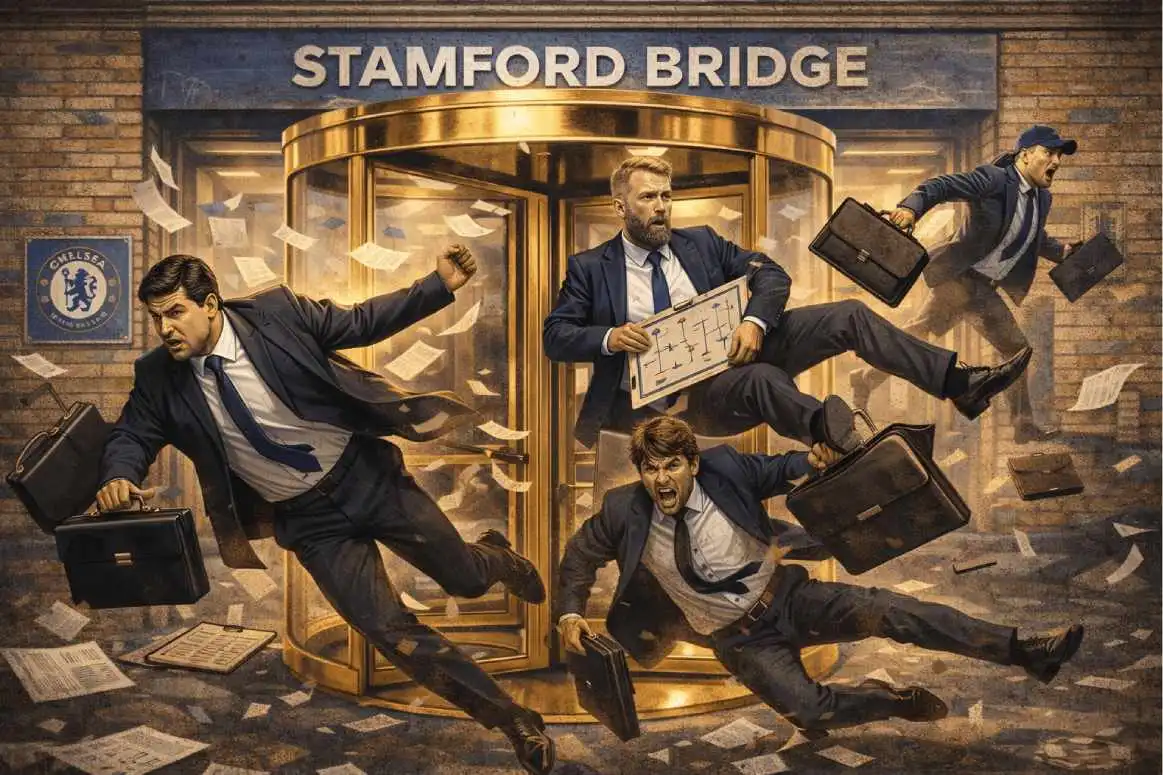
No job in football chews up and spits out managers quite like Chelsea.
Since Jose Mourinho walked into Stamford Bridge calling himself “The Special One” back in 2004, Chelsea have employed 18 different managers. That works out to roughly one new boss every 14 months. Some won trophies and still got sacked. Others never stood a chance. A few became legends despite their short stays. But almost all of them learned the same brutal lesson: managing Chelsea is not for the faint of heart.
With Liam Rosenior now becoming the latest name on this ever-growing list, it feels like the perfect time to look back at every Chelsea FC manager since the Abramovich era began and ask a simple question. Is this the most impossible job in football?
Where It All Started
When Roman Abramovich bought Chelsea in 2003, he inherited Claudio Ranieri. The Italian had done solid work, finishing second in the Premier League and getting the club into the Champions League. But solid was not good enough for the new Russian billionaire. Abramovich wanted trophies immediately.
Enter Jose Mourinho.
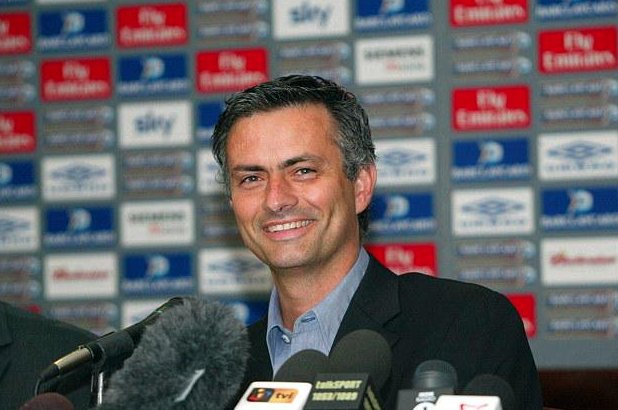
Fresh off winning the Champions League with Porto, the Portuguese manager arrived with supreme confidence. His famous “Special One” press conference set the tone for everything that followed. Mourinho delivered exactly what Abramovich wanted. Two Premier League titles in his first two seasons. An FA Cup. Two League Cups. Chelsea became the dominant force in English football.
But even winning was not enough. Mourinho and Abramovich clashed over transfers, tactics, and the direction of the club. In September 2007, just three years after his triumphant arrival, Mourinho was gone. He had won eight trophies. It did not matter. This set the template for how Chelsea would treat every manager who came after him.
The Revolving Door Opens
What followed Mourinho’s departure was chaos dressed up as ambition.
Avram Grant came in and actually did pretty well. He took Chelsea to the Champions League final in 2008, losing on penalties to Manchester United in Moscow. John Terry slipped on that famous spot kick and the rest is history. Grant also finished second in the Premier League. Two near misses should have earned him more time. Instead, Chelsea sacked him after just eight months.
Luiz Felipe Scolari arrived next with a World Cup winner’s medal and big expectations. The Brazilian lasted seven months before getting the boot in February 2009. Guus Hiddink stepped in as caretaker and actually won the FA Cup, proving that sometimes interim managers can deliver where permanent ones cannot.
Carlo Ancelotti brought some stability. The Italian won the Premier League and FA Cup double in his first season, becoming the first Chelsea manager to achieve that feat. His team scored 103 league goals that year. Absolutely incredible stuff. Then Chelsea finished second the following season and Ancelotti was sacked on the final day of the campaign. Let that sink in. He won the double one year and got fired the next because second place was not acceptable.
Champions of Europe, Unemployed by Christmas
The period from 2011 to 2013 perfectly captures the madness of managing Chelsea.
Andre Villas-Boas was supposed to be the next Mourinho. Young, Portuguese, tactically innovative. He lasted eight months before getting sacked midseason. Roberto Di Matteo took over as caretaker and somehow, against all odds, won the Champions League. Chelsea’s first ever European Cup. The greatest achievement in club history at that point.
Di Matteo was rewarded with a permanent contract. Six months later, after a poor run of results in the group stage of the Champions League, Chelsea sacked the man who had delivered their most prized trophy. He won them the Champions League in May and was unemployed by November. That tells you everything about how this club operates.
Rafael Benitez came in as interim manager despite being hated by the fans for his Liverpool connections. He won the Europa League. Then he left. The cycle continued.
Mourinho Returns, History Repeats
Jose Mourinho came back in 2013 promising he was now “The Happy One” instead of “The Special One.” He won the Premier League in 2015 playing brilliant football. Eden Hazard was sensational. Diego Costa scored goals for fun. Everything clicked.
Then the 2015-16 season started and nothing worked. Chelsea were 16th in the table by December. Mourinho was gone again, this time after just two and a half years in his second spell. The man who had defined Chelsea’s success could not escape the curse.
Antonio Conte picked up the pieces and won the title in his first season with a revolutionary 3-4-3 formation. He won the FA Cup in his second season. Chelsea sacked him anyway after a public falling out with the board over transfers. Two years, two major trophies, goodbye.
The Modern Era Gets Even Messier
Since Conte left in 2018, Chelsea have cycled through managers at an alarming rate.
Maurizio Sarri won the Europa League in his only season, then left for Juventus. Frank Lampard returned as a club legend, promoted youth players, and got the sack 18 months into the job.
Thomas Tuchel came in midseason and won the Champions League just four months later. He added the Club World Cup and UEFA Super Cup. In September 2022, new owners Todd Boehly and Clearlake Capital sacked him after a poor start to the season. Another Champions League winning manager shown the door.
Graham Potter was supposed to bring long-term stability. He lasted 206 days and won just 12 of his 31 games. The shortest permanent manager in Chelsea history. Lampard came back as interim caretaker and won just one match from eleven. Mauricio Pochettino lasted a single season before departing. Enzo Maresca won the Conference League and Club World Cup but that was not enough either. Now Liam Rosenior takes over with a six-year contract that history suggests he will never see the end of.
Every Chelsea Manager Since Mourinho
| Manager | Tenure | Days | Trophies | Severance Pay |
|---|---|---|---|---|
| Jose Mourinho | Jun 2004 – Sep 2007 | 1,205 | 2 PL, FA Cup, 2 League Cups | £23.1m |
| Avram Grant | Sep 2007 – May 2008 | 238 | None (CL finalist) | Undisclosed |
| Luiz Felipe Scolari | Jul 2008 – Feb 2009 | 223 | None | £12m |
| Carlo Ancelotti | Jul 2009 – May 2011 | 720 | PL, FA Cup | £6m |
| Andre Villas-Boas | Jul 2011 – Mar 2012 | 256 | None | £12m |
| Roberto Di Matteo | Mar 2012 – Nov 2012 | 262 | Champions League, FA Cup | £10m |
| Jose Mourinho | Jun 2013 – Dec 2015 | 927 | PL, League Cup | £8.3m |
| Antonio Conte | Jul 2016 – Jul 2018 | 740 | PL, FA Cup | £26.6m |
| Maurizio Sarri | Jul 2018 – Jun 2019 | 337 | Europa League | £0 (Left) |
| Frank Lampard | Jul 2019 – Jan 2021 | 571 | None | £2m |
| Thomas Tuchel | Jan 2021 – Sep 2022 | 588 | CL, Club World Cup, Super Cup | £15m |
| Graham Potter | Sep 2022 – Apr 2023 | 206 | None | £13m |
| Mauricio Pochettino | Jun 2023 – Jun 2024 | 325 | None | £10m |
| Enzo Maresca | Jul 2024 – Jan 2026 | ~550 | Conf League, Club World Cup | £5-10m (est.) |
Note: Interim managers Guus Hiddink (twice), Rafael Benitez, and Frank Lampard (second spell) not included as permanent appointments. Total severance paid since 2004: over £150 million.
What Does This Mean for Rosenior?
Liam Rosenior walks into Stamford Bridge knowing full well what he is signing up for. The average Chelsea manager since 2004 has lasted less than two years. Even winning the Champions League could not save Di Matteo or Tuchel. Winning the Premier League could not save Mourinho, Ancelotti, or Conte.
The club has spent over 150 million pounds in compensation payments to sacked managers during the Premier League era. That is more than Manchester United, Liverpool, Arsenal, and Manchester City combined. Antonio Conte alone cost them £26.6 million to fire after winning the Premier League and FA Cup. Jose Mourinho collected over £31 million across his two sackings. Thomas Tuchel won the Champions League and still walked away with £15 million when they fired him. Even Frank Lampard, a club legend, only got £2 million because his salary was far lower than most. Chelsea does not do patience. They never have under Abramovich and nothing suggests Boehly and Clearlake are any different.
Rosenior has been given a six-year contract. On paper, that sounds like commitment. In practice, Chelsea contracts mean absolutely nothing. Maresca had five years when he signed. Tuchel was supposed to be there long-term too.
The 41-year-old from Wandsworth has talent, ambition, and ideas. He developed young players brilliantly at Hull and Strasbourg. He fits what this ownership group says they want to build. But so did Potter. So did Pochettino. So did plenty of others who came before him.
If Rosenior succeeds, he will join the tiny group of Chelsea managers who actually lasted. If he fails, he will join the much larger group who discovered that managing Chelsea is less a job and more a countdown to unemployment.
Good luck, Liam. You are going to need it.