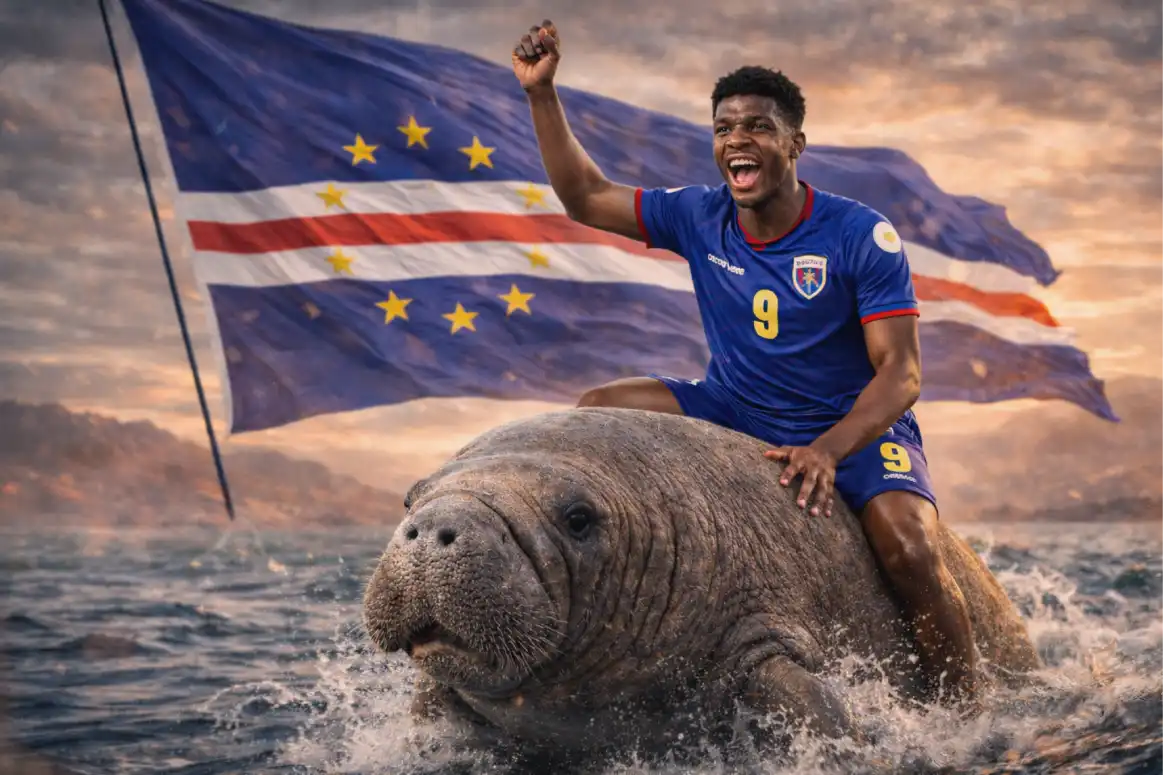
A country of 525,000 people. Ten volcanic islands floating in the Atlantic Ocean off the coast of West Africa. No professional league. No famous football academy. And now, a team heading to the FIFA World Cup for the very first time.
Cape Verde qualifying for the 2026 World Cup is one of the most remarkable underdog stories in football history. This is a nation smaller than most cities, yet they topped their qualifying group ahead of Cameroon, a team that has been to eight World Cups. Let that sink in. The Blue Sharks finished first, and the Indomitable Lions finished second. Nobody predicted that.
If you love a fairytale in football, Cape Verde is your team at the 2026 World Cup. This is everything you need to know about the smallest country by land area ever to reach the biggest tournament on earth.
From Obscurity to Africa’s Proudest Story
Cape Verde has zero previous World Cup appearances. This is brand new territory for everyone involved. The country only gained independence from Portugal in 1975, and competitive international football was barely on their radar until the early 2000s.
Their first attempt at World Cup qualification came for the 2002 tournament. They lost to Algeria and went home early. For the next decade, Cape Verde were considered one of Africa’s smaller football nations, rarely making headlines and never seriously threatening to reach the global stage.
Everything changed in 2013 when the Blue Sharks qualified for the Africa Cup of Nations for the first time. They shocked the continent by reaching the quarterfinals, beating South Africa on penalties before losing to Ghana. Suddenly people were paying attention.
Cape Verde returned to AFCON in 2015 and again in 2021, where they reached the Round of 16. At the 2023 tournament in Ivory Coast, they made it back to the quarterfinals, only falling to South Africa on penalties after 120 scoreless minutes of intense football.
There was also heartbreak along the way. During 2014 World Cup qualifying, Cape Verde reached the CAF playoff stage but were docked points for fielding an ineligible player. That penalty cost them a genuine shot at reaching the finals in Brazil. The dream was delayed, not destroyed.
Now, twelve years after that first AFCON appearance, the Blue Sharks are swimming in World Cup waters. The journey from nowhere to North America is complete.
Road to 2026: Finishing Above Cameroon
Cape Verde were placed in CAF qualifying Group D alongside Cameroon, Angola, Libya, Eswatini, and Mauritius. Before a ball was kicked, most experts expected Cameroon to cruise to qualification. The Indomitable Lions have eight World Cup appearances. Cape Verde had none.
The campaign started solidly but not spectacularly. Four points from the opening three matches kept the Blue Sharks in contention, though nobody was getting excited just yet. Then came the low point. In June 2024, Cameroon thrashed Cape Verde 4-1 in Yaounde. It was humiliating. Some fans wondered whether the dream was over.
It was not over. It was just getting started.
Coach Bubista adjusted his tactics, tightened the midfield pressing, and gave more freedom to the wingers. The results were instant. Cape Verde won their next five qualifying matches in a row, a streak that had never happened before in the country’s entire football history. They beat Mauritius, destroyed Angola 2-1 away from home thanks to a Dailon Livramento brace, and hammered Libya at home.
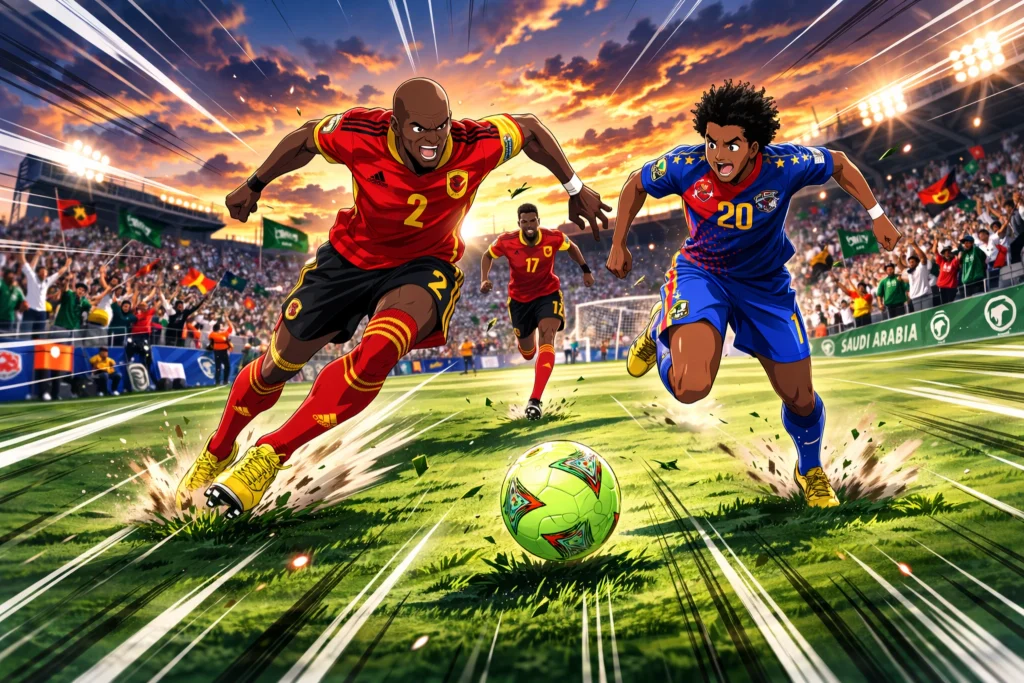
By September 2025, the Blue Sharks sat top of Group D, two points clear of Cameroon heading into the final stretch. The momentum was unstoppable.
Cape Verde finished qualifying with seven wins, two draws, and just one defeat. They accumulated 23 points, four clear of Cameroon. For a country where workers were given the afternoon off to watch the final qualifier, this was more than football. It was a national awakening.
The Night Cameroon Came to Praia
September 9, 2025. Estádio Nacional de Cabo Verde. Just 8,000 seats in the ground, but the entire country was watching.
Cameroon arrived knowing they needed a result to keep their qualification hopes alive. Vincent Aboubakar, Bryan Mbeumo, and the rest of the Indomitable Lions brought serious firepower. Cape Verde had home advantage and the passion of an entire nation behind them.
The first half was tense. Both teams were cagey, cancelling each other out. Neither side could find the breakthrough, and the 8,000 fans inside the stadium could barely breathe. At halftime, it was still 0-0.
Then Dailon Livramento happened.
In the 54th minute, the Casa Pia forward latched onto a loose ball and fired it home. The stadium exploded. Fans leapt from their seats. You could probably hear the noise on every one of the ten islands.
Cameroon pushed hard for an equalizer. Aboubakar was replaced by Christian Bassogog. Wave after wave of attacks crashed against Cape Verde’s defense. Steven Moreira picked up a yellow card for a tactical foul. The minutes dragged on. Five additional minutes of stoppage time felt like fifty.
Then the final whistle came. Cape Verde 1, Cameroon 0. The Blue Sharks were four points clear with two games to play. History was within touching distance. One month later, a 3-0 victory over Eswatini sealed the deal, with goals from Livramento, Willy Semedo, and veteran defender Stopira. Fans invaded the pitch. The celebrations lasted all night.
The Blue Sharks Who Will Make History
Ryan Mendes is the captain and the heartbeat of Cape Verde football. At 36 years old during the tournament, the winger is both the country’s all-time leading scorer and most capped player with over 90 caps. He has spent his career across Europe and the Middle East with clubs like Lille, Nottingham Forest, Le Havre, and Sharjah. This will almost certainly be his only chance to play at a World Cup, and you can bet he will give everything for those 90 minutes.
Dailon Livramento is the star of qualifying and the player most likely to grab headlines in North America. Born in Rotterdam to Cape Verdean parents, the striker will be 25 during the tournament and plays on loan at Casa Pia from Serie A club Hellas Verona. He scored four goals during the qualification campaign, including the winner against Cameroon and the opener against Eswatini. He is fast, direct, and clinical. Defenders in Group H should be worried.
Roberto “Pico” Lopes might have the best backstory of any player at the entire World Cup. The Dublin-born Shamrock Rovers defender, who turns 34 during the group stage, was recruited to play for Cape Verde through LinkedIn. Yes, the professional networking site.
A coach messaged him in Portuguese, and Lopes ignored it as spam. Nine months later, they wrote again in English, and he finally realized it was a real call-up. He is now a regular starter and became the first League of Ireland player ever to qualify for the World Cup.
Garry Rodrigues brings experience and flair from the wing. The 35-year-old Apollon Limassol attacker, also born in Rotterdam, has been a consistent performer for the national team across multiple AFCON campaigns and was instrumental in the qualifying run.
Jamiro Monteiro provides creativity and energy from midfield. The PEC Zwolle midfielder, who has also played in MLS, links defense to attack and gives Cape Verde technical quality in the middle of the park.
Stopira is the veteran warrior of this squad. The center-back will be 38 by the time the World Cup kicks off, but do not let that fool you. He scored the third goal in the 3-0 clincher against Eswatini, sealing qualification in stoppage time. With over 50 caps and a career spanning Portugal, Spain, and Hungary, he brings leadership and composure that money cannot buy.
Bubista: Africa’s Coach of the Year
Pedro Leitão Brito, known to everyone as Bubista, is the man who turned an impossible dream into reality. The 56-year-old Cape Verdean was appointed national team manager in January 2020 and has built something truly extraordinary.
Bubista was born on the island of Boa Vista. His nickname comes from the Creole form of his birthplace. He played as a center-back for Cape Verde in his playing days, earning 28 caps and eventually captaining the side. After retiring, he managed several domestic Cape Verdean clubs including Mindelense, Académica do Mindelo, and Sporting Clube da Praia before stepping up to the national team.
His playing career was not limited to Cape Verde either. He spent a season in Spain with Badajoz in the Segunda División and six years in Angola with ASA. That international experience shaped his tactical approach and gave him perspective on what it takes to compete at a higher level.
After leading the Blue Sharks to their historic World Cup qualification, Bubista was named 2025 CAF Men’s Coach of the Year, beating out the likes of Morocco’s Walid Regragui. For a coach from a country of half a million people to win African football’s highest coaching honor is remarkable. It tells you everything about what he has achieved.
Bubista typically sets up in a 4-3-3 formation that emphasizes defensive discipline and quick transitions. Cape Verde are not going to dominate possession against Spain or Uruguay. They will sit deep, stay organized, and look to hit you on the counter with the pace of Livramento and the creativity of Mendes.
How Far Can the Blue Sharks Swim?
Realistically, Cape Verde enter the 2026 World Cup as one of the biggest underdogs in the tournament. Their squad is made up of players from Portuguese lower divisions, Cypriot leagues, Israeli clubs, and even the League of Ireland. There are no household names. No one plays in the Premier League or La Liga.
But that is exactly what makes them dangerous. Nobody expected them to top a qualifying group above Cameroon either. Cape Verde play with the freedom that comes from having absolutely nothing to lose.
The expanded 48-team format is also a factor. With the top two from each group qualifying automatically and the eight best third-place finishers also advancing, there is a genuine path to the Round of 32. Cape Verde do not need to beat Spain. They just need to pick up enough points across three games.
Their AFCON experience helps too. Playing in high-pressure continental tournaments against African powerhouses has prepared this squad for the intensity of the World Cup. They will not be overwhelmed by the occasion.
Group H: Swimming With Sharks and Giants
Cape Verde landed in Group H alongside Spain, Uruguay, and Saudi Arabia. It is a brutal draw. Spain are the reigning European champions and one of the favorites for the title. Uruguay are two-time World Cup winners with a squad full of talent. Saudi Arabia shocked Argentina at the 2022 World Cup.
Here is the complete group stage schedule:
| Match | Date | Opponent | Venue | Time (ET) |
|---|---|---|---|---|
| 1 | June 15, 2026 | Spain | Mercedes-Benz Stadium, Atlanta | 12:00 PM |
| 2 | June 21, 2026 | Uruguay | Hard Rock Stadium, Miami | 6:00 PM |
| 3 | June 26, 2026 | Saudi Arabia | NRG Stadium, Houston | 8:00 PM |
Opening against Spain in Atlanta is the ultimate baptism of fire. The reigning Euro champions will be heavy favorites, but Cape Verde will have nothing to fear. A solid defensive performance and keeping the scoreline respectable would be a success.
Uruguay in Miami will be another massive challenge. The South Americans are always physical, always organized, and always dangerous. Cape Verde will need to be at their absolute best defensively to stay in this match.
The final group match against Saudi Arabia in Houston is the one circled on the calendar. This is the most winnable fixture. Both teams are underdogs in this group, and the result could determine whether either side progresses. If Cape Verde arrive in Houston still with a chance, the atmosphere could be electric.
The Blue Sharks’ Destiny
Cape Verde will exit in the group stage with their heads held high.
Spain and Uruguay are simply too strong on paper. But the Saudi Arabia match gives the Blue Sharks a realistic shot at pulling off a result that would echo around the football world.
Here is the beautiful thing about Cape Verde at this World Cup. Win or lose, they have already achieved something incredible. A country where the national stadium holds 8,000 people. A team whose star defender was recruited through LinkedIn.
A squad scattered across fourteen different countries. They qualified ahead of Cameroon, a team with eight World Cup appearances.
If they manage to beat Saudi Arabia and sneak into the top three, it would be one of the greatest underdog stories in World Cup history. Even if they do not, the Blue Sharks will return home as heroes.
Every island will be watching. Every village. Every school. Cape Verde is about to introduce itself to the world, and the world is going to fall in love.