Bruce Meyer said the quiet part out loud months before he formally took over the players union.
“A lockout is all but guaranteed,” the new MLB Players Association executive director told reporters in February. “That’s not because players want it. It’s because of where the owners are.”
In May, the two sides finally sat down in New York to start talking about it. ESPN’s Jeff Passan called the meeting the first official collective-bargaining talks before the December 1 expiration. The Athletic’s Evan Drellich called it something blunter. “Baseball’s march to a likely lockout is underway.”
That sentence has done a lot of structural work in the last week. It is also probably right.
Why an MLB lockout in December 2026 looks all but guaranteed
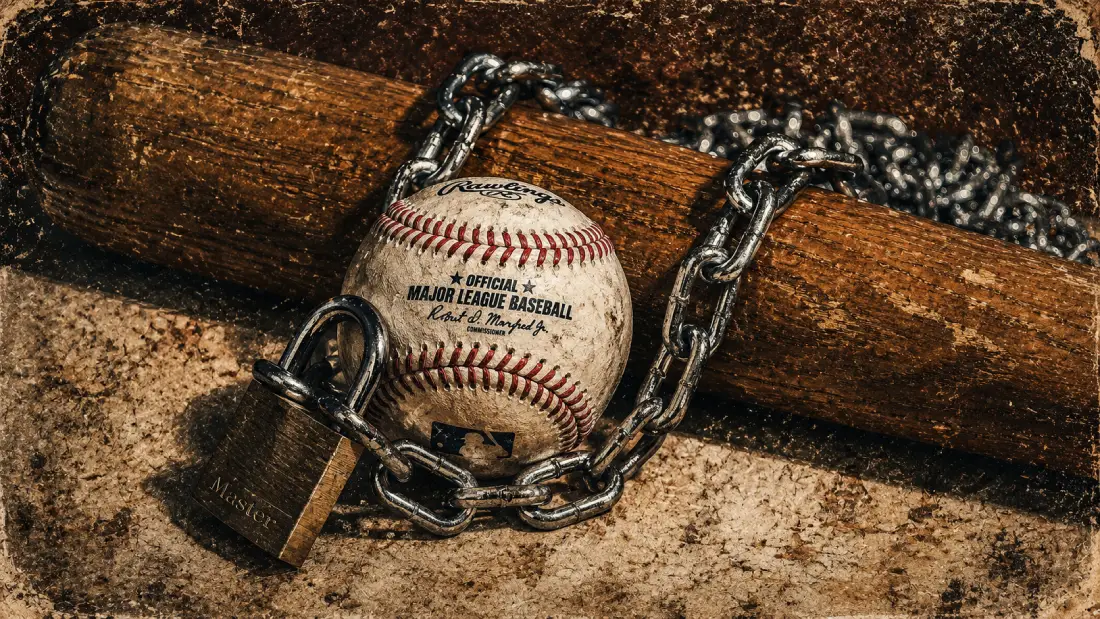
The calendar is the easiest part of this to read. The current collective bargaining agreement expires at 11:59 p.m. ET on December 1. If a new deal is not in place by then, the owners are expected to lock the players out. They did the same in December 2021. That work stoppage ran into March of 2022. It delayed spring training. It cost zero regular-season games.
No one inside the sport is taking that outcome for granted this time around.
Commissioner Rob Manfred has been open about the strategic value of an offseason lockout. He has compared it to “a .22 (caliber firearm), as opposed to a shotgun or a nuclear weapon.” That is not the language of a man trying to avoid one. That is a man framing the lockout as a measured tool.
The owners’ labor committee is the engine behind those decisions. Six men shape it: Dick Monfort (Rockies), Hal Steinbrenner (Yankees), Jerry Reinsdorf (White Sox), John Sherman (Royals), Ray Davis (Rangers), Mark Attanasio (Brewers). Monfort, heavily involved during the 2021-22 lockout, has stated his position publicly. “The only way to fix baseball is to do a salary cap and a floor.”
That brings us to the actual fight.
The MLB salary cap proposal is the fight underneath everything
Owners want a salary cap. Players have spent 50 years calling that a non-starter. Nothing about either position has softened.
What is new is the specific shape of what is being floated. In late February, a leaked early estimate suggested the league might propose a cap of $260-280 million with a floor of $140-160 million. That is a gap of roughly $120 million between the highest and lowest allowed payrolls. It is not a cap in any structural sense. It is a ceiling that several current rosters already brush against, paired with a floor that several owners have shown no appetite to spend toward.
The current system has a soft ceiling. The 2026 competitive balance tax threshold is $244 million. The Los Angeles Dodgers’ projected luxury tax payroll for 2026 sits at $413.6 million, roughly $96 million more than any other team. The Miami Marlins are running a payroll of about $79-80 million. That spread is what owners point to when they talk about competitive balance.
Hal Steinbrenner, whose Yankees historically spend at the top of the league, captured the room. “It’s difficult for most of us owners to be able to do the kinds of things (the Dodgers) are doing.” When the Yankees’ owner is publicly frustrated about the Dodgers’ spending, the conversation has already moved past whether owners are unified.
The union’s position is the same one it has held for decades. A cap limits earnings. A cap is, in former executive director Tony Clark’s words, “institutionalized collusion.” Meyer, his replacement, called any cap “fundamentally inconsistent with free market principles and player rights.” That is not negotiating language. That is foundational.
What an MLB lockout could actually cost the sport
The reason a December 1 lockout feels likely and the lost-games scenario feels less certain is that baseball has lived this story twice in living memory, and the outcomes were not the same.
The 2021-22 lockout cost no regular-season games. Spring training was truncated. Games were squeezed back into the schedule. Fans grumbled. Fans came back.
The 1994-95 strike was a different magnitude entirely. The league lost an estimated $580 million. Players forfeited $230 million in salaries. Average attendance fell 20 percent, from 31,256 per game in 1994 to 25,008 in 1995. The Montreal Expos, who had the best record in baseball when play stopped, never recovered and eventually relocated.
That is the cautionary tale every player and owner has read. It is also why an offseason lockout, in isolation, is not the same emergency as games lost in summer. November is widely considered the most vital month in this cycle. If both sides can move enough by then, baseball gets a 2022 result. If they cannot, the math starts pointing somewhere uglier.
Meyer is preparing for the second scenario. Manfred is keeping his .22 within reach. And the calendar, indifferent to either, keeps moving toward December 1.