Ice hockey is one of the fastest sports in the world, combining speed, teamwork, physical play, and quick decision-making. For new fans, the action can feel difficult to follow at first because the game moves so quickly from one end of the rink to the other.
Once you understand the basic rules, scoring system, and common penalties, watching matches becomes much more enjoyable. You begin to notice team strategies, player roles, and the small moments that can completely change a game.
How a Match Is Played
An ice hockey match is played between two teams competing to score goals using sticks and a puck. The puck must fully cross the goal line inside the opponent’s net for a goal to count.
Each team has six players on the ice at the same time.
| Position | Main Responsibility |
|---|---|
| Goaltender | Stops shots and protects the net |
| Defensemen | Defend against attacks and clear the puck |
| Forwards | Create scoring chances and attack |
Matches are divided into three periods lasting 20 minutes each. The team with the most goals at the end of regulation wins the game.
Understanding Faceoffs
Play begins with a faceoff, where the referee drops the puck between two opposing players.
Faceoffs happen:
- At the start of each period
- After goals
- After stoppages in play
Winning faceoffs can help teams gain early control of possession and create attacking opportunities.
How Goals Are Scored
Players can score in several different ways depending on the situation around the net.
| Shot Type | Description |
|---|---|
| Wrist Shot | Quick and accurate release |
| Slap Shot | Powerful long-distance shot |
| Snap Shot | Fast shot with added power |
| Backhand Shot | Shot taken from the reverse side of the stick |
Goals can also come from rebounds, deflections, and close-range finishes near the crease.
Common Rules New Fans Should Know
There are several important ice hockey rules that shape how the game is played.
Offside
An attacking player cannot enter the offensive zone before the puck crosses the blue line. If this happens, play is stopped for offside.
Icing
Icing occurs when a team shoots the puck from behind the center line all the way past the opponent’s goal line without anyone touching it.
This rule prevents teams from simply clearing the puck repeatedly to waste time.
Line Changes
Players rotate frequently during matches because of the high intensity of the sport. Most shifts only last around 30 to 60 seconds before fresh players enter the ice.
Understanding Penalties
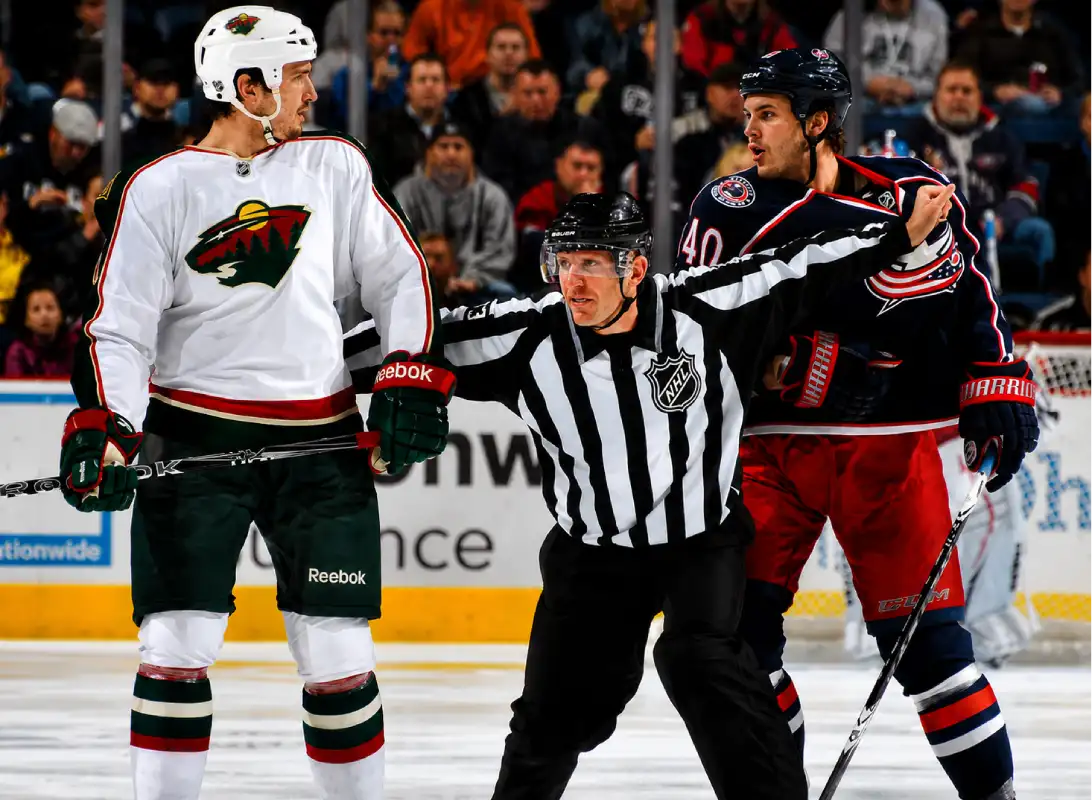
Ice hockey allows physical contact, but there are still clear limits on what players can do.
When rules are broken, referees issue penalties that force players to temporarily leave the ice.
| Penalty | Explanation |
|---|---|
| Tripping | Using the stick or body to make an opponent fall |
| Hooking | Slowing an opponent using the stick |
| Slashing | Swinging the stick aggressively at another player |
| High-Sticking | Contact above shoulder level with the stick |
| Holding | Restricting an opponent’s movement |
Most minor penalties last two minutes.
Power Plays and Penalty Kills
When a team has more players on the ice because of a penalty, it receives a power play advantage.
During power plays, teams usually attack aggressively and move the puck quickly to create open shooting chances.
The defending team tries to survive the disadvantage, which is known as a penalty kill.
Special teams often play a huge role in deciding close games.
Overtime and Shootouts
If the score is tied after regulation, overtime is played.
Many leagues use sudden-death overtime, meaning the first goal immediately ends the game.
If overtime finishes without a winner, the game may move to a shootout where players take individual attempts against the goaltender.
Shootouts create some of the most dramatic moments in the sport because every shot carries enormous pressure.
Why Physical Play Matters
Body checking is a major part of professional ice hockey. Strong physical play can disrupt attacks, force mistakes, and shift momentum during important moments.
At the same time, players must stay disciplined because dangerous hits can lead to penalties or suspensions.
Balancing aggression and control is one of the key parts of the sport.