The last time Formula 1 had a dynasty this complete, it took years for people to fully understand what was happening. Red Bull built something methodical and deep between 2010 and 2023. Four titles with Sebastian Vettel. Four more with Max Verstappen. An engineering culture that felt untouchable.
Then the exits started. And they have not stopped.
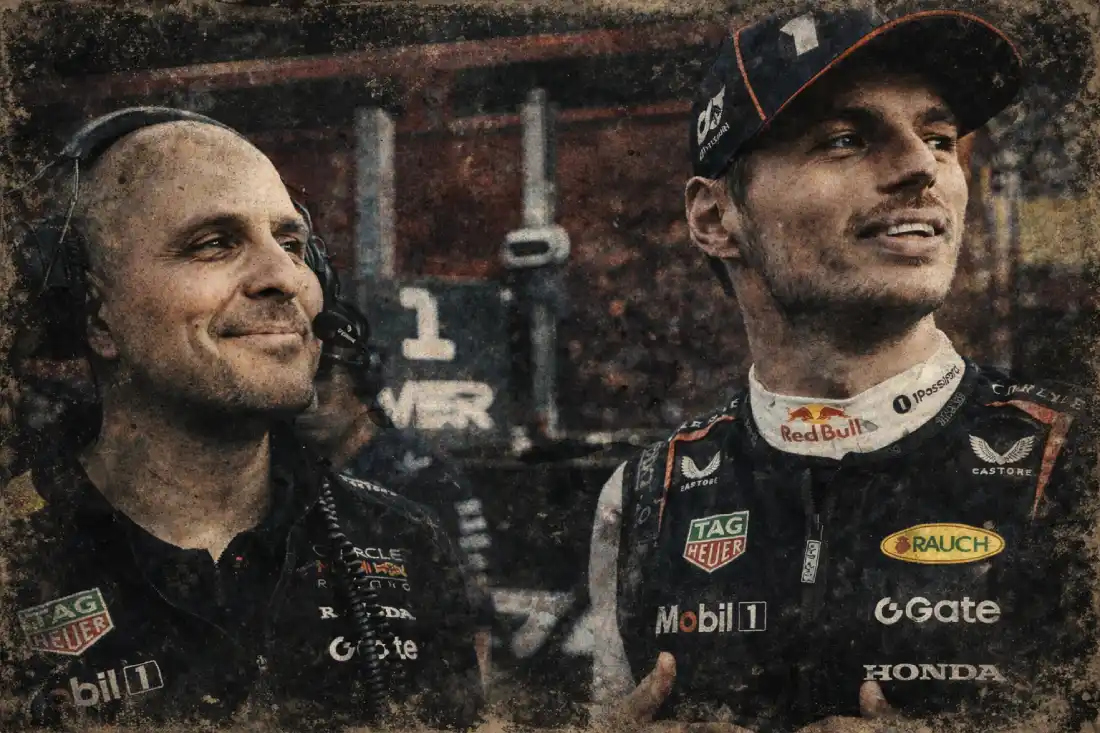
On April 9, McLaren confirmed that Gianpiero Lambiase, Red Bull’s head of race engineering and the man who has sat on the pit wall calling Verstappen’s races since the 2016 Spanish Grand Prix, has agreed to join them. He will take up the newly formalised role of chief racing officer. He will report directly to team principal Andrea Stella. His start date is no later than 2028, when his current Red Bull contract expires.
Red Bull confirmed the same in their own statement, noting that Lambiase “continues in his role as head of racing and as race engineer to Max Verstappen” until then.
That is the official version of events. The bigger picture is harder to summarise in a press release.
What Red Bull Has Lost Since 2024
Count the departures and let the list do the work.
Rob Marshall, the chief designer behind much of Red Bull’s aerodynamic dominance, joined McLaren at the start of 2024. Will Courtenay, who ran Red Bull’s race strategy operation, became McLaren’s sporting director in January 2026. Adrian Newey, widely regarded as the most gifted aerodynamicist in the history of the sport, left. Jonathan Wheatley, the sporting director, left. Christian Horner, the team principal who presided over all eight of those drivers’ championships, was fired in July 2025.
And now Lambiase.
Every one of those names was a load-bearing column in what Red Bull built. The question for Laurent Mekies, who has inherited the team principal role, is what the structure looks like when you remove enough of them.
The answer, at least through the first three races of 2026, has not been encouraging. Red Bull’s new chassis and their first in-house engine have both struggled under F1’s new regulations. Verstappen sits ninth in the championship. His best result across those three races is a sixth place. For a driver who spent years at the very front of every grid, ninth is not a number he was built to accept.
The Lambiase-Verstappen Partnership, Explained
To understand why this move registers differently from the others, it helps to understand what a race engineer actually does at the top level of this sport.
A race engineer is the primary voice in a driver’s ear. Every strategic call, every tyre update, every pace instruction, every moment when the numbers say one thing and the feel of the car says another, that conversation runs through the race engineer. The relationship is built on years of shorthand. On trust that goes both ways.
Lambiase and Verstappen have had that relationship since May 2016. Nearly a decade of Sundays together. Four championships together. The radio exchanges between them, sometimes terse and combative, sometimes quietly precise, became one of the defining sounds of this era of the sport.
Verstappen said after the Japanese Grand Prix that he is questioning his future in F1. He cited the new cars. The new regulations, which mandate a 50-50 split between internal combustion and electrical power, have created a level of energy management complexity that he has described as unenjoyable. That candour, and the performance clause in his contract that makes him free to leave Red Bull at the end of this season if results do not improve, has made the Lambiase announcement land with particular weight.
Verstappen and Lambiase are close. But it is the car, not the engineer’s departure, that will decide whether Verstappen stays or goes. If Red Bull cannot fix the performance gap, no amount of continuity in the radio relationship changes the fundamental problem.
What McLaren Is Building
The pattern of these signings is not accidental. McLaren have been deliberate about this.
Marshall arrived and brought structural knowledge of what made Red Bull’s car concepts work. Courtenay arrived and brought strategic intelligence from inside one of the most analytically precise operations in the paddock. Now Lambiase arrives to take direct charge of race operations, a role that currently falls to Stella on top of everything else he already carries.
That last point matters. Stella is doing two jobs. As team principal, he provides the cultural and organisational leadership that has been central to McLaren’s transformation. As de facto technical director, he oversees a structure where three technical directors, Peter Prodromou in aerodynamics, Mark Temple in performance, and Neil Houldey in engineering, as well as Marshall, all report upward to him. That is an enormous amount of ground for one person to cover.
The plan with Lambiase is straightforward. He takes the race operations weight off Stella’s desk. Stella gets more bandwidth for leadership. The team, which already has Randy Singh as racing director and Courtenay sitting beneath him on the sporting side, now has another experienced layer on the trackside operation.
McLaren’s statement described the hire as part of “the team’s long-term commitment to confirming its position as a championship-winning team.” That language is carefully chosen. They are not saying they want to win another title. They are saying they want to be the kind of organisation that wins titles consistently. Those are different ambitions, and the infrastructure they require is different too.
The Stella-to-Ferrari Question
It would be incomplete to write about this without addressing the rumour that has followed the announcement since it broke. The suggestion in parts of the paddock is that Lambiase is being brought in because Stella is being positioned to leave for Ferrari.
McLaren insiders push back on this directly. The line from inside the team is that Stella is not going anywhere, and that Lambiase’s role is genuinely about reducing the load on a team principal who is stretched across too many functions.
The logic of that explanation is sound. Stella’s value at McLaren has always been as much cultural as technical. He has built a working environment where openness is encouraged and the old politics of elite motorsport have been deliberately pushed out. That kind of organisational identity is hard to transfer, harder still to replicate. It is not obvious why someone who built it would walk away from it.
For now, there is no credible evidence that the Ferrari rumour is anything more than pattern recognition from outsiders connecting Italian dots.
The Wider Picture for 2026 and Beyond
What makes this moment genuinely interesting is that the competitive landscape of the sport is unsettled in a way it rarely is.
Red Bull won eight constructors’ championships in the last decade. McLaren won theirs last year. The new technical regulations have reshuffled performance in ways nobody fully predicted. Verstappen, arguably the best driver of his generation, is ninth in the standings and publicly unhappy. His race engineer is leaving for the team that beat them to the title.
None of that means Red Bull cannot recover. Mekies is an experienced operator. The team still has Verstappen under contract unless the performance clause is triggered. The engineering talent that built those eight championships is partly depleted but not entirely gone.
But championships are won by organisations, not just individuals. The accumulation of expertise, the institutional knowledge of how to make a car fast in the most complex racing conditions on earth, those things live in people. And the people keep choosing to go to Woking.
Lambiase joins McLaren in 2028. The sport will look different by then. Verstappen’s future will have been decided one way or another. The new regulations will be understood rather than scrambled over.
What will not have changed is the scoreboard. And right now, McLaren is writing on it faster than anyone else.