Fifty-two years is a long time to wait for anything. It is long enough to watch children grow up, have children of their own, and then watch those grandchildren grow up too. It is long enough for an entire football generation to come and go without ever knowing what it feels like to represent your country at a World Cup.
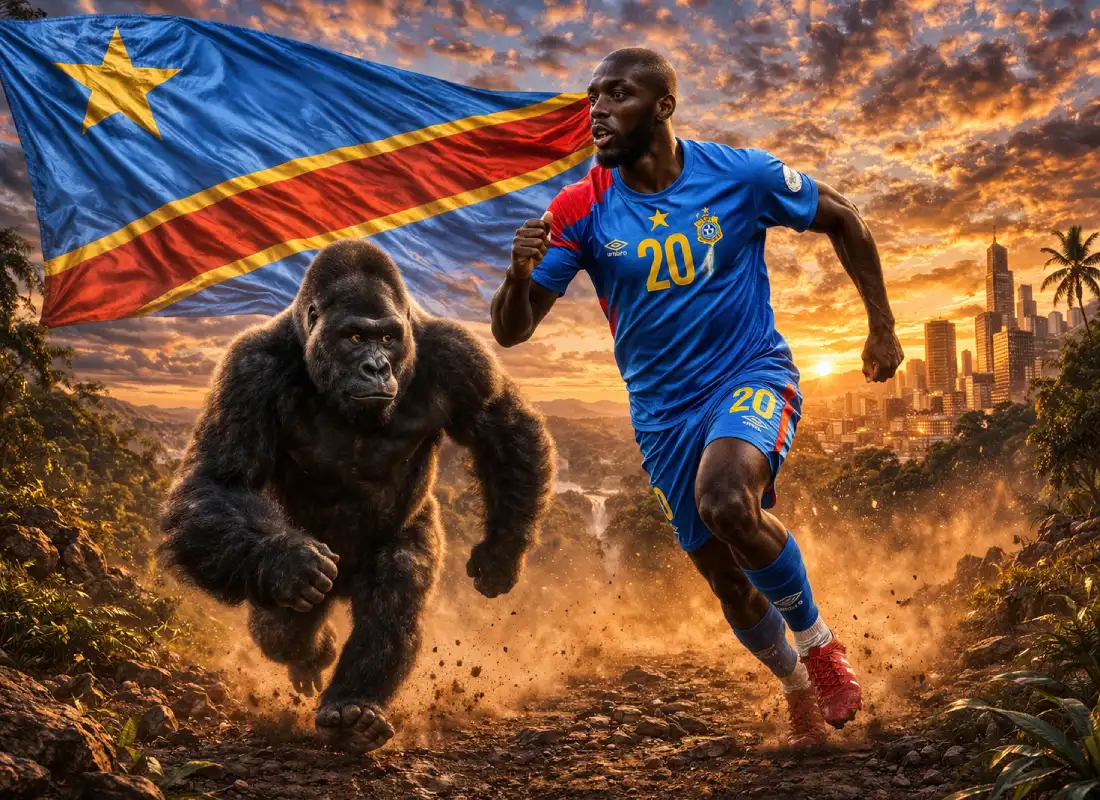
That is exactly what DR Congo’s players and fans have been living with since 1974. Half a century of qualifying campaigns, near misses, heartbreak, and hope deferred. When Axel Tuanzebe bundled the ball over the line in the 100th minute at the Estadio Akron in Guadalajara on March 31, 2026, the dam finally broke. Players collapsed to the turf. Thousands of fans watching on giant screens in Kinshasa poured into the streets.
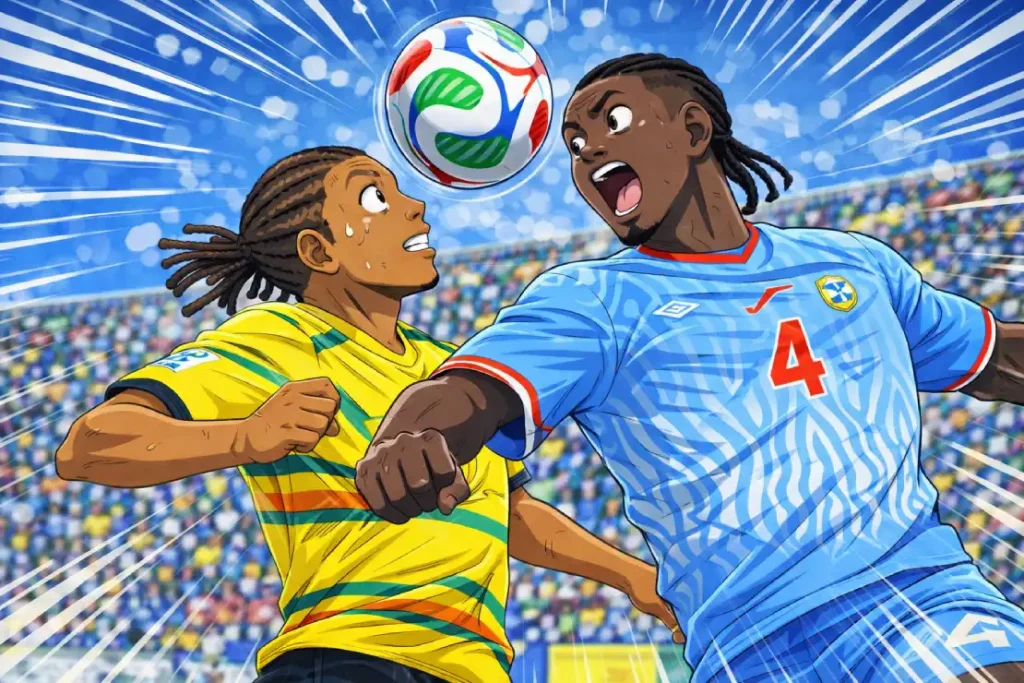
The Leopards are going to the World Cup.
This is everything you need to know about DR Congo heading into the 2026 FIFA World Cup.
A History Written in Two Chapters: Zaire 1974 and Everything That Followed
DR Congo have appeared at the World Cup exactly once before. But that one appearance has never been forgotten, and the story behind it is one of the most remarkable and heartbreaking in the history of the game.
In 1974, the country was called Zaire. Under dictator Mobutu Sese Seko, football had become a national project. Mobutu poured money into the sport, promising cars and houses to the players. It worked. Zaire won the Africa Cup of Nations in March 1974 and became the first Sub-Saharan African team to qualify for a World Cup. The players arrived in West Germany as African champions. They had every reason to believe they could make history.
Then it all went wrong. Not on the pitch at first, but behind closed doors.
Their opening match against Scotland was actually respectable. Zaire played with spirit and organization, holding a Scotland side featuring Denis Law, Billy Bremner, and Kenny Dalglish to a 2-0 defeat. Given the circumstances, that was no disgrace. But then the money disappeared. Players were told their promised payments would be sent directly back to Zaire. They refused to play. Mobutu personally called the team captain and made it very clear what the consequences of not showing up would be. The players showed up. But their motivation was shattered.
Yugoslavia destroyed them 9-0 in one of the heaviest defeats in World Cup history. Then came Brazil. Mobutu sent further threats: do not lose by more than four goals, or you will not return home. Zaire held reigning world champions Brazil to 1-0 at half-time. Then two more goals went in, and the pressure became unbearable. With Brazil awarded a free kick outside the box in the final minutes, defender Mwepu Ilunga sprinted out of the defensive wall and hoofed the ball away before Rivelino could strike it. To the watching world it looked bizarre and inexplicable. But Ilunga later revealed the truth: he was buying time, terrified of a third goal and the consequences that would follow. Brazil won 3-0. Zaire went home having conceded 14 goals and scored none.
The players mostly disappeared into poverty and obscurity. Goalkeeper Kazadi died penniless. Others ended up living as refugees. The government that had promised them riches abandoned them the moment the cameras stopped rolling.
For 52 years, that painful chapter was all DR Congo had at the World Cup. Now, finally, they get to write a new one.
Road to 2026: The Longest Way Around
DR Congo’s path to this World Cup was not simple. It never is for African teams, and for the Leopards, it involved group stage qualification, two rounds of CAF playoffs, and then a brutal inter-confederation playoff in Mexico. They had to beat three opponents just to get to the tournament.
In CAF qualifying Group B, DR Congo were drawn alongside Senegal, who proved too strong for everyone in the group. The Leopards finished second, a position that took them into the African playoff round rather than earning automatic qualification. It was a tough outcome, but the squad responded by winning every game that truly mattered.
The CAF playoff semi-final paired them with Cameroon. DR Congo won with a stoppage-time goal from captain Chancel Mbemba, the kind of moment that tells you a team has something special about them. Then came the CAF playoff final against Nigeria, one of the continent’s biggest footballing nations, in Rabat.
Nigeria scored in the third minute through Frank Onyeka. DR Congo refused to fold. Meschack Elia equalized on 32 minutes, and neither side could separate themselves through 90 or 120 minutes. It went to penalties. When Mbemba stepped up to take the decisive spot kick and sent it into the net, the Leopards were through to the inter-confederation playoffs in Mexico.
All that stood between them and the World Cup was Jamaica. After a goalless 90 minutes, the match went into extra time. Then, in the 100th minute, a corner swung into the box. Tuanzebe escaped his marker, met it cleanly, and his low shot crossed the line. One agonizing VAR check later, it was confirmed. DR Congo were going to the 2026 FIFA World Cup.
The Night in Guadalajara That Changed Everything
March 31, 2026. Estadio Akron, Guadalajara, Mexico.
The stadium that would host the goal that sent DR Congo to the World Cup would also host one of their group stage matches. There was poetry in that detail that was not lost on anyone.
For 90 minutes, DR Congo and Jamaica cancelled each other out in a tense, anxious affair. The occasion seemed to get to both teams. Chances came and went. Neither goalkeeper was seriously tested in normal time. When the whistle blew for extra time, the 700 Congolese fans who had made the journey to Mexico feared the worst. Penalties, with all the chaos and heartbreak they can bring.
Then came the 100th minute. A corner for DR Congo. The ball curled into the box. Tuanzebe, the former Manchester United defender now at Burnley, lost his marker, got his body in front of it, and directed it toward goal. It squirmed over the line. Players swarmed him. The bench erupted. Jamaica pressed desperately for an equalizer but Congo held firm. When the final whistle came, Tuanzebe dropped to his knees.
“To get the winning goal for the country,” he said afterward, “this is what, as a young boy, you dream about.”
Captain Chancel Mbemba said it even more simply. “It is a dream come true.”
Back home in Kinshasa, the celebrations lasted through the night.
The Stars Who Could Surprise the World
What makes this DR Congo squad genuinely exciting is the depth of Premier League and European experience spread throughout it. This is not a team of unknowns scrapping their way through on determination alone. These are professional footballers competing at the highest level of club football every week.
Chancel Mbemba is the heartbeat of the team. The Lille centre-back and captain carries an authority on the pitch that his teammates visibly respond to. At 31 during the tournament, he is entering the peak years for a defender, bringing experience from his time at Newcastle and Porto alongside the kind of leadership that holds teams together in tight moments. He scored the decisive penalty against Nigeria. He scored the stoppage-time winner against Cameroon. When the Leopards needed someone to step up, Mbemba was there.
Cedric Bakambu is the senior striker and a genuine threat at 35. The Real Betis forward is closing in on becoming DR Congo’s all-time leading scorer and brings a physical, combative style that defenders across Europe have found difficult to contain throughout his career. He has played in La Liga, in China, and across multiple leagues, and has the experience to perform in the biggest games without wilting under the pressure.
Yoane Wissa could be the player who truly lights up the tournament. The Newcastle forward, 29, was one of the most devastating attackers in the Premier League last season at Brentford before his big-money move, scoring 19 Premier League goals and demonstrating the kind of pace, movement, and finishing that makes defenders deeply uncomfortable. At a World Cup, with space to run into and freedom to express himself, Wissa has the ability to be genuinely electric.
Aaron Wan-Bissaka gives the team reliable defensive cover at right back, with his exceptional one-on-one defending having been a Premier League staple for years at Manchester United and now West Ham. Axel Tuanzebe, the man who scored the qualifying winner, brings composure and positional intelligence from his Burnley form. And in midfield, Noah Sadiki, only 21, has been earning rave reviews at Sunderland and provides exactly the kind of energetic, tenacious pressing platform that Desabre’s system demands.
The French Coach Who Made Africa His Home
Sebastien Desabre does not fit the typical profile of a national team manager. The 49-year-old Frenchman had no professional playing career to speak of, moving straight into coaching at the age of 30. What he has done since then is build one of the most fascinating and effective coaching careers in African football.
He has coached in more than eight African countries, including ASEC Mimosas in Ivory Coast, Coton Sport in Cameroon, Wydad Casablanca in Morocco, Uganda’s national team, and Espérance in Tunisia. He won the Moroccan league title with Wydad. He led Uganda to the Round of 16 at the 2019 Africa Cup of Nations. He has worked in front of 80,000 fans at North African clubs and never flinched from the pressure.
Desabre took the DR Congo job in 2022 with a clear mandate: qualify for the 2026 World Cup. He was handed a four-year contract and delivered exactly what was asked of him, even through a qualifying campaign that required navigating an incredibly difficult route all the way through inter-confederation playoffs. The federation rewarded him with an extension that runs until 2029.
Tactically, he organizes his team in a 4-2-3-1 shape that prioritizes defensive solidity and quick counter-attacking transitions. He is not interested in pretty football for its own sake. He wants his team compact, organized, and lethal on the break. Against the group opponents DR Congo are about to face, that approach could yield real results.
Tournament Expectations: Giant Killers in Waiting
DR Congo sit outside the top 50 in Sports Guide’s World Cup 2026 power rankings, which accurately reflects where they sit relative to the tournament’s elite. Nobody is penciling them in as favorites. Nobody is expecting them to win the whole thing.
But this squad has shown throughout qualifying that they can perform in high-pressure matches and find winning moments when everything is on the line. They beat Nigeria on penalties. They beat Jamaica in extra time. Every step of the way, they delivered when the stakes were highest.
The group stage will be the first true test of what this team can do against world-class opposition. If Mbemba organizes the defense effectively and Wissa and Bakambu can create problems in the final third, a point or even a result against one of the big names is not beyond them. And with 32 teams advancing to the knockout round, even a strong third-place showing could be enough to progress.
Group K: Facing Ronaldo in the Opening Match
DR Congo land in Group K, a group that could hardly have been more dramatic when the draw was made. Their opening match is against Portugal and Cristiano Ronaldo. If there was ever a statement game to introduce themselves to the world, this is it.
| Match | Date | Opponent | Venue | Time (ET) |
|---|---|---|---|---|
| 1 | June 17, 2026 | Portugal | NRG Stadium, Houston, Texas | 1:00 PM |
| 2 | June 23, 2026 | Colombia | Estadio Akron, Guadalajara, Mexico | 10:00 PM |
| 3 | June 27, 2026 | Uzbekistan | Mercedes-Benz Stadium, Atlanta, Georgia | 7:30 PM |
The opener against Portugal’s World Cup 2026 squad in Houston will be watched by millions around the globe simply because of the Ronaldo factor. For DR Congo, it is actually a liberating fixture in one sense: nobody seriously expects them to win, which means they can approach it with freedom. A disciplined defensive performance and one moment of quality on the counter could produce something extraordinary. The 1974 Zaire side held Brazil to just 1-0 at half-time. Stranger things have happened.
The match at the Estadio Akron against Colombia’s World Cup 2026 side carries a special resonance. It is the exact same stadium where DR Congo clinched their qualification by beating Jamaica in the inter-confederation playoff. The crowd, the pitch, the dressing rooms will all be familiar. Whether that translates into any kind of psychological edge is impossible to know, but Desabre is certainly aware of it. Colombia are a dangerous, talented team, but they are not unbeatable, and facing them at a venue that already holds such significance for these players is not nothing.
The final group game against Uzbekistan in Atlanta then becomes the crucial one. Uzbekistan are making their World Cup debut and will be full of energy and desperation for a result of their own. DR Congo will need to be at their most organized and concentrated to secure the points that could push them into the knockout stage.
Prediction: An Exit With Pride and a Statement Made
The realistic prediction is that DR Congo finish third in Group K, narrowly missing out on the knockout rounds. Portugal and Colombia are both stronger sides, and the group stage schedule makes it difficult to build momentum when you face the two biggest opponents before the third game.
But football has a habit of ignoring realistic predictions. This DR Congo squad has a captain who scores in the moments that matter most, a forward in Wissa who is capable of a moment that changes everything, and a manager who has spent his entire career finding ways to get the best out of limited resources against bigger opponents.
A point against Portugal would be celebrated across the entire continent of Africa. A win against Colombia would send shockwaves through the tournament. And at minimum, this team is going to compete in every single minute of every game they play. After 52 years in the wilderness, they are not flying to North America just to take part.
The Leopards waited half a century for this. They intend to be remembered.