Croatia has a population of about four million people. You could fit the entire country inside the city limits of Los Angeles. Their domestic league is modest by European standards, their clubs operate on budgets that top-flight sides in England or Spain would spend on a single signing. By every logical measure, Croatia should not be one of the best football countries on earth.
And yet. Third place at their very first World Cup in 1998. Finalists in 2018, losing to France in a match many considered the best final in decades. Third place again in 2022, beating Morocco to claim their second bronze medal. Three podium finishes from six World Cup appearances. No country in the history of the tournament has produced more from less, and now Croatia arrive in North America for their seventh, carrying the weight of an era, a 40-year-old captain playing the last competitive games of his life, and a generation of younger players trying to prove the run will continue long after the legend has gone.
World Cup History: The Greatest Overachievers in Tournament Football
Croatia did not even exist as an independent football nation until the early 1990s. The country declared independence from Yugoslavia in 1991, and the football team that emerged from that process wasted absolutely no time in making history. Their debut at a World Cup came in France in 1998, and they finished third. Third. In their first appearance. Only Portugal in 1966 had ever managed anything comparable on a debut, and Eusébio’s Portugal had the advantage of not playing their way through the trauma of a freshly founded state.
That 1998 squad was special. Davor Suker won the Golden Boot with six goals, scoring in every match Croatia played and winning the Silver Ball as the tournament’s second-best player behind Ronaldo. Croatia beat Germany 3-0 in the quarter-finals when Christian Wörns was sent off early, then lost a bruising semi-final to hosts France when Lilian Thuram scored twice. In the third-place match, they beat the Netherlands 2-1, with Suker scoring the winner. Croatia went home as the most talked-about new team in world football.
The years after were harder. Group stage exits in 2002, 2006, and 2014. A failed qualification campaign in 2010. The golden generation was ageing out, the replacements had not yet emerged, and Croatia looked like a country that might have peaked too early. Then Zlatko Dalic took over in October 2017 with Croatia still struggling to qualify, steadied the ship, and kickstarted one of the most remarkable runs in football history.
The 2018 World Cup in Russia was extraordinary. Croatia beat Denmark, Russia, and England in the knockout rounds to reach their first final, with Luka Modric winning the Golden Ball as the tournament’s best player. They lost 4-2 to France in Moscow, but the manner of the campaign, grinding through three consecutive extra-time matches, playing some of the best football of the tournament, turned Croatia from respected overachievers into genuine legends of the game.
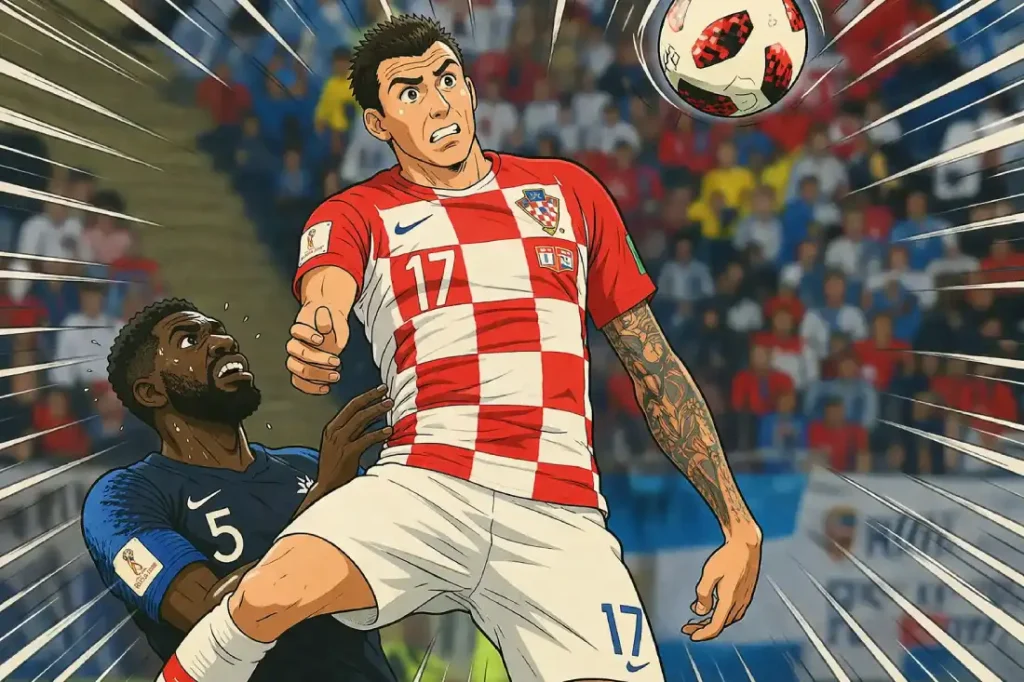
And in 2022, when most assumed that generation was finally finished, they went and won bronze again. Croatia are the only country in World Cup history to finish third in their debut tournament and then reach a subsequent final. Three medals from six appearances. The numbers defy belief.
Road to 2026: Seven Wins and One Draw, Czechia Demolished
Croatia were placed in UEFA Group L alongside the Czech Republic, the Faroe Islands, Montenegro, and Gibraltar. On paper, manageable. In practice, complicated by the fact that the Czechs are a genuinely strong European team and the Faroe Islands had already shown throughout the qualifying cycle they were capable of causing upsets.
Croatia began their campaign in June 2025 because of their Nations League commitments, and the results were immediate and emphatic. A 7-0 away win in Gibraltar set the tone in the opener. Four days later came the result that shaped the whole group. Croatia hosted the Czech Republic in Osijek and won 5-1. Andrej Kramaric ran the show, and the combination of Modric’s orchestration and the movement of the younger players in behind simply overwhelmed a Czechia side who had expected a much tighter contest.
The rest of qualifying followed the pattern. A 1-0 away win in the Faroe Islands. A 4-0 demolition of Montenegro at home. A 0-0 draw in Prague with Czechia, the only points Croatia dropped in the entire campaign,. Back-to-back wins over Gibraltar and the Faroe Islands saw them close out the group. An away win in Montenegro, where Croatian fans were attacked between Budva and Cetinje on the journey to the ground and had to be escorted to the stadium under police guard, completed a campaign of seven wins and one draw from eight games. Twenty-six goals scored, four conceded. Croatia won Group L by six points from the Czechs and qualified comfortably.
Best Qualifier Moment: Taking Czechia Apart
June 9, 2025. Opus Arena, Osijek. Croatia versus the Czech Republic. This was the game that told you everything about where this team still was.
Czechia were not a soft touch. They were the group’s main challengers, a side packed with Bundesliga and Premier League professionals, fully expecting to make this competitive. Croatia were without several key figures due to the late start to their qualifying calendar and had questions from outside about whether an ageing squad could still dominate European competition.
The answer arrived in ninety minutes of controlled, clinical football. Andrej Kramaric was unplayable. Modric picked passes through Czechia’s midfield as if reading a training drill. By the end it was 5-1, and the Croatian fans in Osijek were singing for an hour after the final whistle. Dalic described it as a complete performance. The Czechs went home knowing second place was now the ceiling for their campaign. That early, comprehensive statement of intent settled the group before it had even properly started, and gave Croatia genuine momentum heading into the autumn fixtures.
The Passing of the Torch, and Whether It Has Been Passed Yet
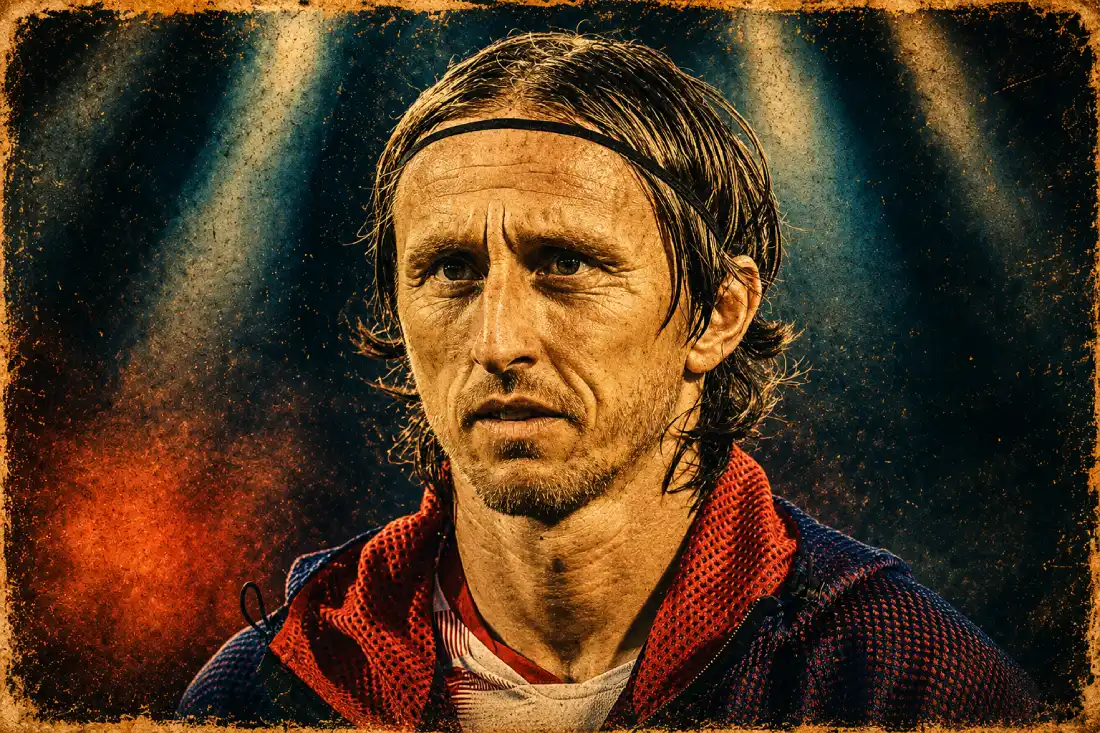
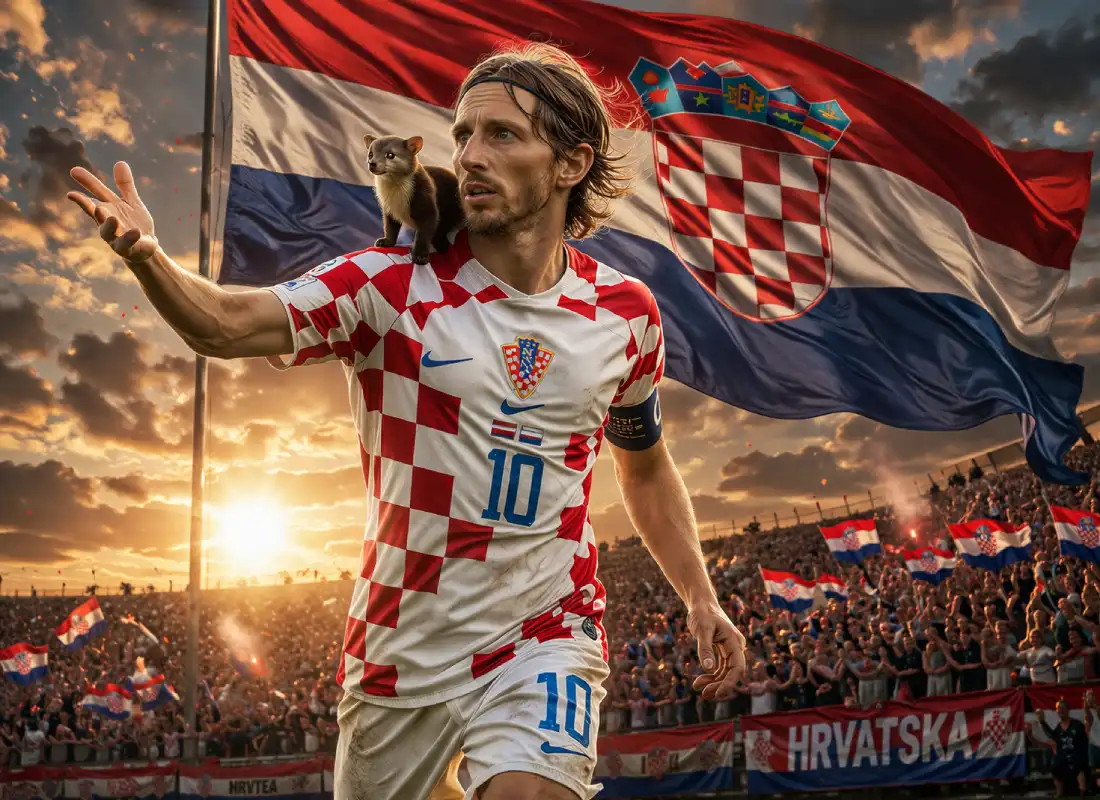
Luka Modric turns 41 in September 2026. He will be 40 years old when Croatia kick off their World Cup against England in Dallas on June 17. He left Real Madrid in the summer of 2025 after thirteen seasons and twenty-eight trophies and joined AC Milan, continuing to play at the highest level with a quiet determination that refuses to accept the logic of clocks. His plan, which he has stated clearly and which manager Dalic has publicly shared, is to end his career at this World Cup. The farewell has been building for years. Now it is finally here.
Watching Modric at 40 is one of the more moving things in world football right now. The speed has gone. He no longer covers the distances he once did. But the first touch, the reading of the game, the weight of the pass, the ability to find a teammate in space that nobody else has seen, none of that has left. He remains Croatia’s heartbeat, the player around whom everything is organised, and the symbol of a nation that still cannot quite believe what it has produced.
Josko Gvardiol was supposed to represent the next chapter. The Manchester City defender, born in January 2002, is already one of the best centre-backs in the Premier League, valued at over £77 million and praised by Pep Guardiola as a generational talent. He is everything the next generation of Croatian football could be. And then on January 4, 2026, he suffered a broken shinbone against Chelsea and was sidelined for months. His return date is uncertain heading into the tournament, with some sources projecting him back as early as May 2026 and others suggesting July. Whether he makes the opening group games is one of the biggest question marks of Croatia’s tournament.
Andrej Kramaric carries the attacking burden in the meantime. The striker is Croatia’s third-highest scorer in history, behind only the retired Davor Suker and Ivan Perisic, and was the standout performer during qualifying. His ability to find space in tight areas and finish with either foot gives Croatia an option beyond the set-piece brutality that has sometimes defined their knockout play. Ivan Perisic, still involved at 37 and Croatia’s second-highest scorer of all time behind Suker, provides experience and threat on the left. Mateo Kovacic, when fit, is the ideal partner for Modric in the middle and one of the most technically accomplished central midfielders in world football after his years at Chelsea and Manchester City. Martin Baturina, the young creative midfielder, has the potential to emerge as a genuine star if given consistent opportunities here.
Manager Profile: Dalic, The Quiet Man Who Built a Dynasty
Zlatko Dalic took over Croatia in October 2017 when their World Cup qualification was in genuine danger. They had lost to Iceland and Turkey in qualifying, the mood was toxic, the previous manager Ante Cacic had been sacked. Dalic had spent years managing in the Middle East with Al-Faisaly, Al-Hilal, and Al-Ain, not exactly the typical route to leading a European football nation,. The appointment raised eyebrows.
He is now widely considered the greatest manager in Croatian football history. A World Cup final. Back-to-back third-place finishes across two tournaments. A Nations League final in 2023, where Croatia lost on the day but showed they had not yet surrendered their status as a top-ten nation in Europe. No other Croatia manager has come close to matching his record, and Dalic has done it with essentially the same group of players throughout, managing egos, ageing bodies, and the expectations of a nation that punches impossibly above its weight.
Born in Livno in what is now Bosnia and Herzegovina in 1966, Dalic played as a defensive midfielder at a modest level before transitioning into coaching. The Saudi and UAE stints taught him how to manage pressure, how to work in environments where results matter absolutely, and how to extract maximum performance from players through trust rather than fear. His relationship with Modric and the senior players is built on mutual respect, giving the captain enormous authority within the squad, and and Modric repays it with the kind of dedication that makes younger players raise their own standards.
Tournament Expectations: Dangerous Enough to Go Deep
The honest assessment of this Croatia squad is that it is in transition. The era defined by Modric, Rakitic, Perisic, Lovren, and Brozovic is drawing to a close. Brozovic has already retired from international football. Rakitic is long gone. Perisic is 37. The question of what comes next, whether Gvardiol, Baturina, and the generation below them can maintain Croatia’s extraordinary World Cup consistency, will be answered over the next four years, not these four weeks. You can see where Croatia sit among the tournament contenders and how the global picture looks in Sports Guide’s World Cup 2026 power rankings.
At the same time, this is still Croatia. They have a world-class manager, an all-time great playing his final tournament, a goalkeeper in Dominik Livakovic who saved three penalties in a single shootout against Japan in 2022, and a collective understanding of how to win tight knockout games that other nations would envy. In the expanded 48-team format, with 32 teams advancing to the knockout round, Croatia’s ceiling is realistically the quarter-finals. If Gvardiol returns fit and Modric plays some of his best football as a genuine farewell gift to the country he has represented so brilliantly, a semi-final is not beyond them.
The group stage should be navigable. England’s World Cup 2026 campaign opens against Croatia in Dallas, a rematch of the 2018 semi-final, and that is clearly the hardest fixture of the group. But Panama and Ghana are beatable. Ghana’s World Cup 2026 squad has quality in attack but walks into North America without a confirmed manager, still searching for direction after the sacking of Otto Addo. Panama’s World Cup 2026 campaign represents their second ever tournament appearance, and while they are improving, they are still some distance below Croatia’s level.
World Cup 2026 Group Stage: A Date With Destiny in Dallas
Croatia play their opening match against England in Dallas on June 17. The symbolism does not need laboring. England knocked Croatia out of the 2022 European Championship at the group stage. Croatia knocked England out of the 2018 World Cup semi-final with Mandzukic’s extra-time winner in Moscow. The rivalry is real, the history is vivid, and this time it comes at the group stage with everything still to play for. A Croatia win would almost certainly confirm they are through. A loss and the pressure immediately transfers to the Ghana and Panama games.
Here is Croatia’s complete group stage schedule:
| Match | Date | Opponent | Venue | Time (ET) |
|---|---|---|---|---|
| 1 | June 17, 2026 | England | AT&T Stadium, Arlington, Texas | 4:00 PM |
| 2 | June 23, 2026 | Panama | BMO Field, Toronto, Canada | 7:00 PM |
| 3 | June 27, 2026 | Ghana | Lincoln Financial Field, Philadelphia, Pennsylvania | 5:00 PM |
The England game in Dallas is genuinely fascinating. Tuchel’s side qualified with a perfect record and go into the tournament as one of the favourites. Croatia are ranked lower, ageing in key positions, and potentially without Gvardiol. But if Dalic has proven one thing in eight years, it is that Croatia under-perform in the statistics and over-perform on the scoreboard. This is a team that wins games they are not supposed to win, and they will arrive in Dallas knowing exactly what they are capable of.
The Panama game should be won if Croatia perform anywhere near their qualifying level. The Ghana game closes the group and, assuming it still matters, will test the depth of this Croatia squad with four days to recover from what could be a grueling Toronto outing.
Prediction: Quarter-Finals, with the Dream of Something More
Croatia will qualify from Group L. Second place is most likely given England’s quality, but a draw against Tuchel’s side is entirely within reach and nothing about this group is settled until it is played.
In the knockout rounds, Croatia’s track record speaks for itself. They beat Germany 3-0 in a World Cup quarter-final. They beat England in extra time in a semi-final. They beat Brazil on penalties in a quarter-final. The tournament does not frighten them. The quarter-finals feels like the floor, with a semi-final entirely possible if the draw falls kindly and Gvardiol is fit enough to make his presence felt.
What makes this tournament genuinely emotional, beyond the football, is the farewell it represents. Modric has given Croatia a gift no other player in their history has come close to matching. From a nation of four million people, he has made his country one of the most respected footballing nations on earth. One last summer, one last tournament, one last shot at the title that has always, just barely, stayed out of reach. Whatever happens in North America, Croatia will be worth watching every step of the way.